TrailSpark Vol. 02 · Denver, CO · R1T Owner Perspective
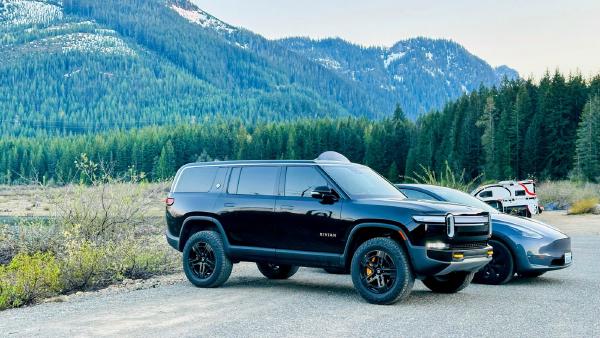
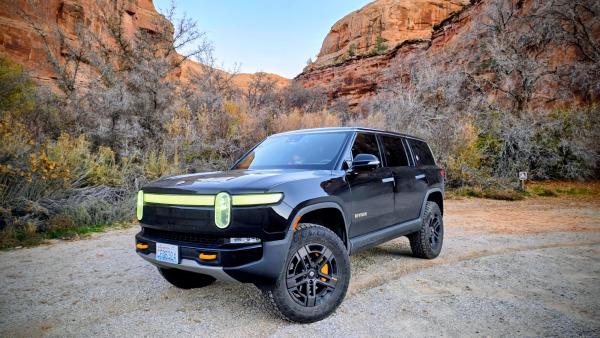
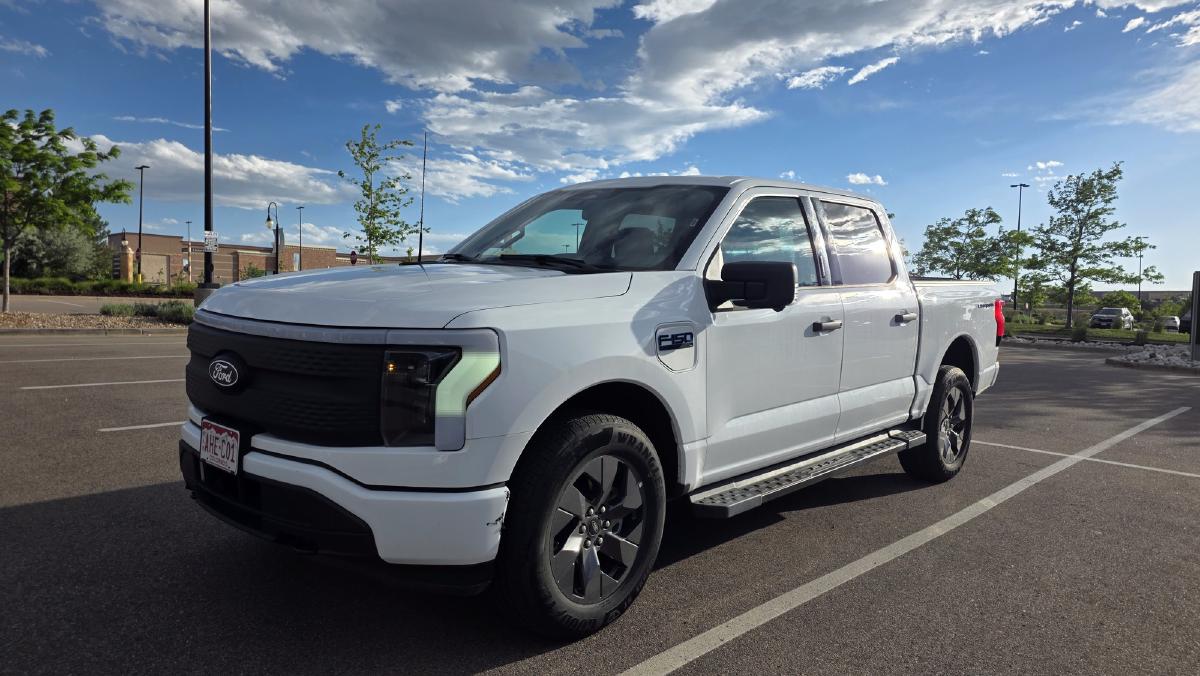
I didn't plan to review the F-150 Lightning. It was a rental, Denver suburbs, a business trip. But two days in a truck that surprised me is two days worth writing about. I own both an R1S and an R1T — this is the R1T comparison.
What Works
- Genuinely fast and responsive, drives smaller than it is
- Turning radius tighter than you'd expect from a full-size truck
- Commanding visibility, you see everything
- Frunk swallowed a full-size suitcase plus backpacks without hesitation
- Sound system nearly on par with Gen 1 Rivian audio
- Cabin space is cavernous, seats are genuinely comfortable
What Doesn't
- Body-on-frame physics catch up in corners: it's still a truck
- Infotainment is a generation behind in EV-specific features
- No DC fast charger routing in native nav, not even basic search
- No battery preconditioning
- Parker/Aurora suburbs: a fast charger desert
- Ford discontinued it, which says something
A Rivian owner walks into a rental lot
Denver, personal business, two days in the Parker and Aurora suburbs. The rental happened to be an F-150 Lightning Standard Range. No agenda, no test plan. Just a truck.
I own both an R1S and an R1T. The R1T is the direct competitor here, truck to truck. Both are purpose-built EVs and have never pretended otherwise. The Lightning is something different: Ford took the best-selling vehicle in America and swapped the ICE powertrain for electric. Same truck. Same bones. Different soul. Two days wasn't enough to fully resolve that tension. But it was enough to form a real opinion.
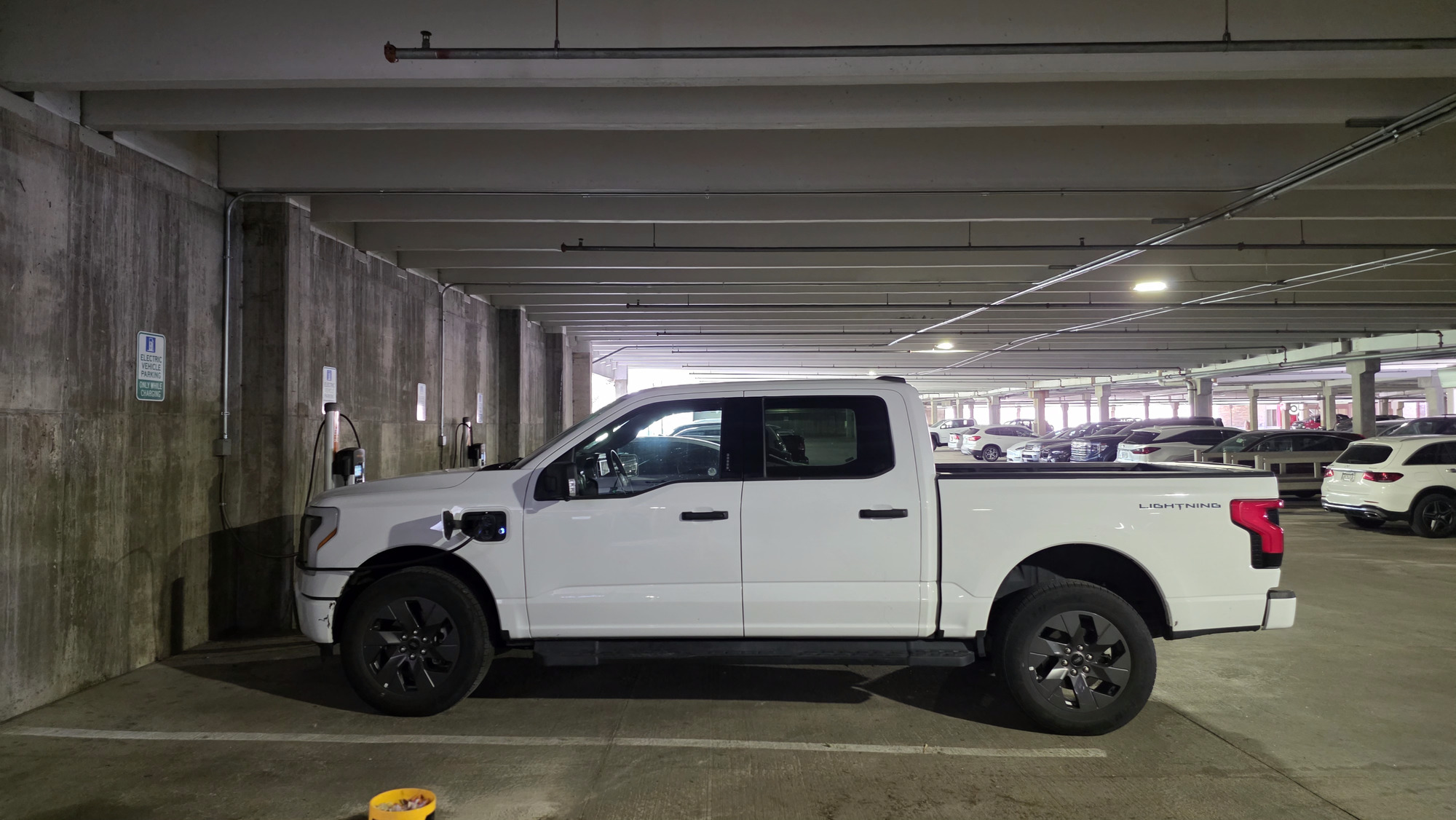
It drives like it forgot it's a full-size truck
The Lightning is fast and responsive in a way that doesn't match its footprint. The turning radius felt tighter than I expected, tighter than the R1T, which matters more than people think in city driving and parking lots. The suspension is soft and well-damped, more so than either Rivian, which run planted and sporty but firmer. Visibility is commanding. The frunk swallowed a full-size suitcase and two backpacks without ceremony. That's usable space, not a party trick.
The limits show in corners. Push it through a sweeping on-ramp and it reminds you it's body-on-frame: body roll, a hint of float. That's not a flaw; it's the honest physics of what this vehicle is. The R1T handles more like a sport truck. Different mandates.
And then the number that genuinely surprised me. Over 158 miles of mixed highway and city, the Lightning returned about 2.1 mi/kWh — that's actually better than my R1S. It makes sense: the R1S hauls more weight and pushes more air with that SUV profile, and the Standard Range battery means less mass to move. Highway speed usually punishes a slab-sided truck like the F-150, so 2.1 mi/kWh on mixed roads is genuinely impressive. That's right on EPA spec (2.1 mi/kWh combined, 68 MPGe). Ford got the powertrain right — even where the software fell short.
The charging experience was rough, and that's the product's problem, not mine
Picked up the truck at 83% SOC. No NACS adapter with me, a mistake I won't repeat. What followed was a lesson in why the charging network matters as much as the vehicle.
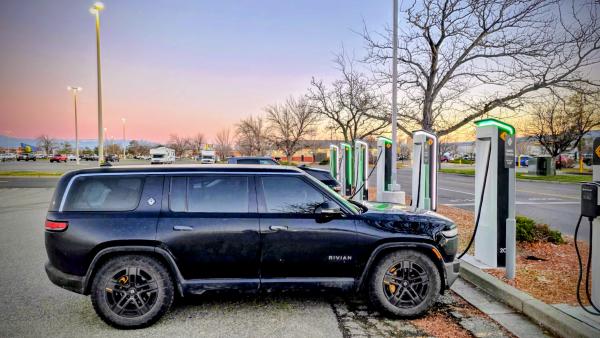
Charging Log — Parker / Aurora Suburbs
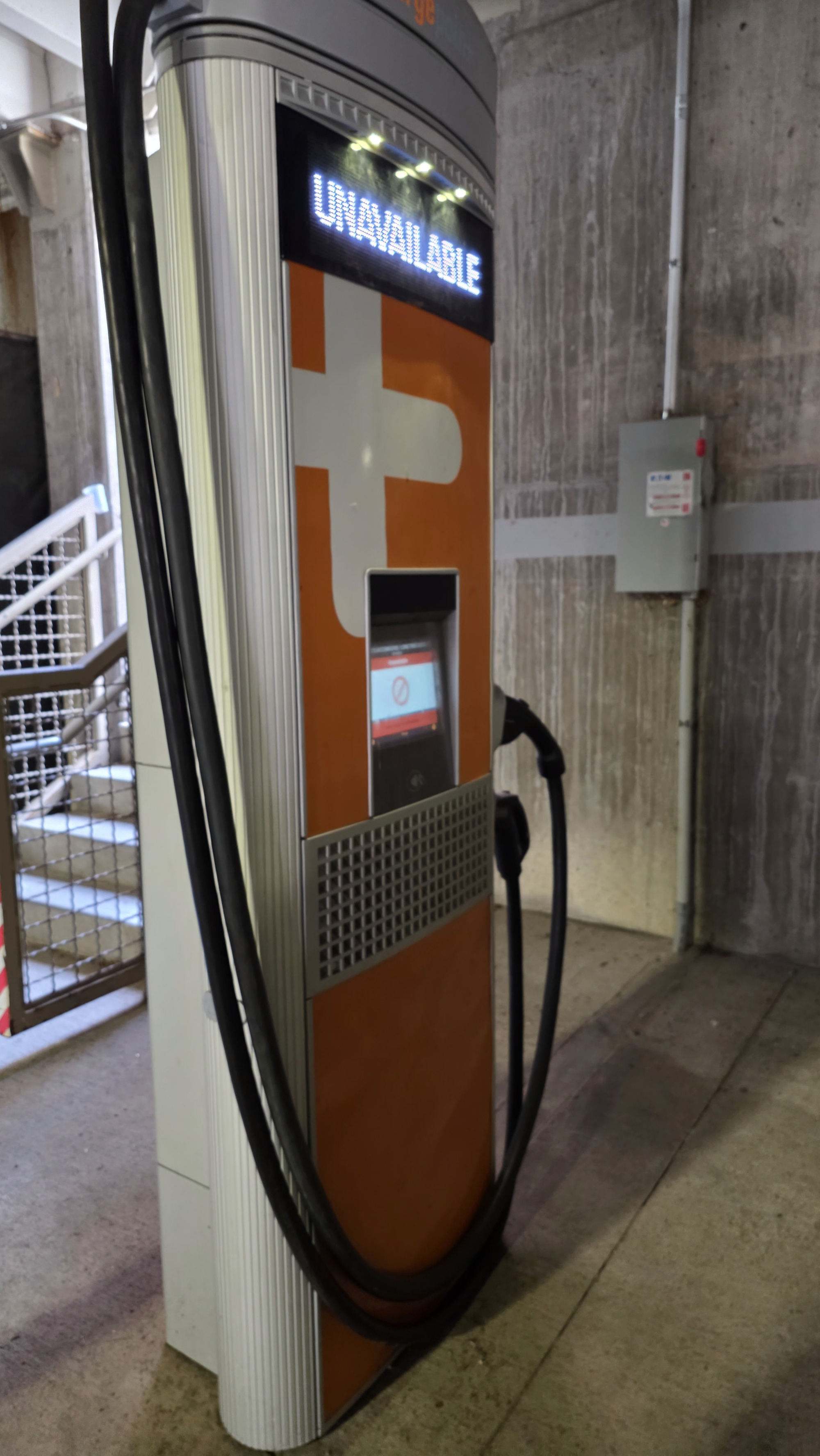
Colorado's fast charger build-out is highway-corridor focused. The suburban surface street grid in Parker and Aurora is a different story: sparse, unreliable, and heavily L2. That's partly an infrastructure problem, not uniquely Ford's. But the Lightning makes it worse: the native nav has no meaningful DC fast charger integration. Not unreliable routing — absent routing. I couldn't get the truck to show me where to charge. No battery preconditioning either. On the Rivian, both happen quietly and automatically. On the Lightning, you're on your own.
Some range anxiety on day two. Not because I was in danger, but because I was flying blind in an unfamiliar truck with no intuition for its efficiency curve. A NACS adapter would have unlocked the Supercharger network and changed the whole picture. Lesson: bring one if you're renting a Lightning.
The infotainment is where it falls behind most visibly
Some of this may be rental limitations. But even accounting for that, the infotainment feels like it was built by a team that understood trucks and understood software separately and never fully bridged the two. DC fast charger routing is absent, not just weak. Battery preconditioning doesn't exist. These aren't luxury features; on a purpose-built EV platform, they're table stakes. The Rivian handles both quietly and automatically. The Lightning asks you to figure it out yourself.
Ford took the F-150 and swapped the ICE powertrain for electric. Same truck. Same bones. Different soul. That's the uniqueness and the beauty of it, and also its ceiling.
The Lightning is a genuine EV achievement when you view it as what it is: the world's most popular truck, electrified without alienating the people who buy it. For someone who hauls things occasionally, commutes on open roads, and charges at home, it's a compelling choice. The fact that Ford discontinued it says more about corporate will than about the vehicle's merit.
Who is this truck for?
Someone who hauls things occasionally. Someone whose commute doesn't involve crowded streets. Someone who charges at home and doesn't depend on public DC fast charging to make their day work. If that's you and you're an F-150 loyalist, the Lightning makes a genuinely compelling case.
It's not a Rivian and it was never trying to be. The R1T was engineered as an EV from a blank sheet of paper. The Lightning was engineered to make electrification feel familiar to people who already love the F-150. Both are legitimate mandates. The Lightning executes its mandate impressively.
I came out more impressed than I expected. The bones are good. The cabin is good. The frunk is legitimately useful. What's missing is the software layer that makes an EV actually livable outside your driveway. Ford discontinued the Lightning before they got there, but the underlying thesis — electrify the truck America already trusts — was always sound. Here's hoping their next electric truck platform is built from the ground up to own it.