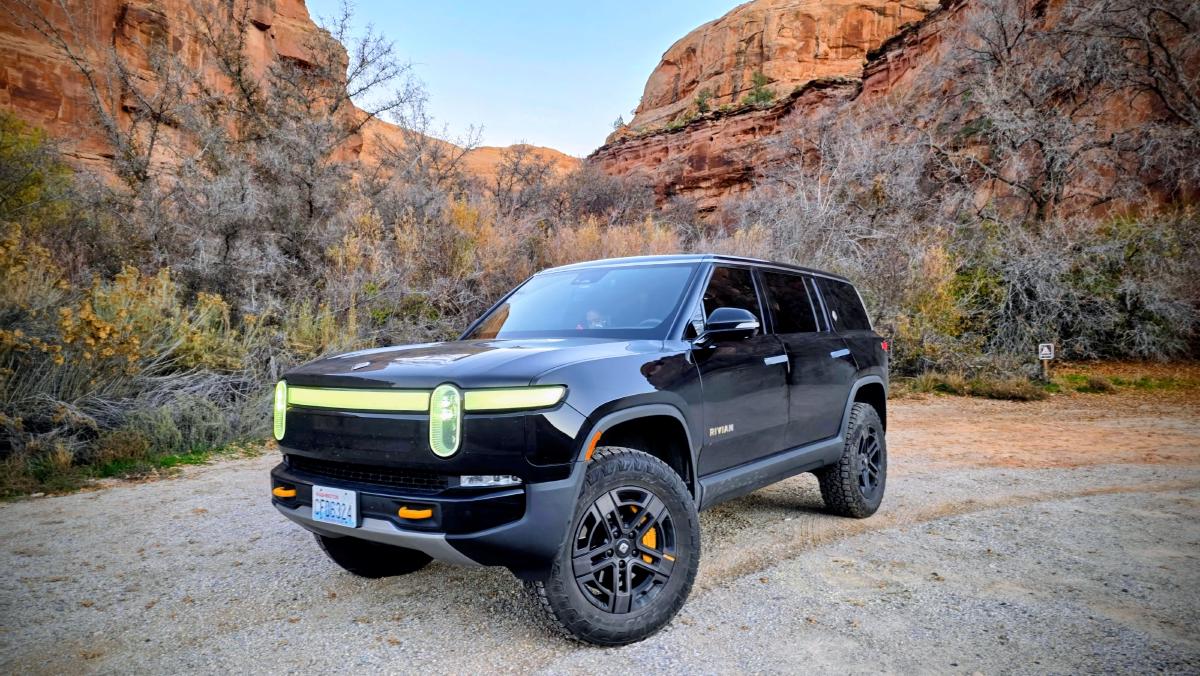
3,000 miles. Three mountain passes. 11,113 feet altitude. Zero gas stops. One very good dog. Let’s go!!
A cross-country road trip from Seattle to Denver is a big deal in any vehicle. Doing it in an EV in late November through the Rockies? That’s a dare. We did this for the first time in 2024 in the Rivian R1S, blitzed it in two days, and it was exhausting. Amazing, but exhausting.
This time we did it right. Four leisurely days each way. Overnight stops in Boise, Salt Lake City, and Grand Junction. Hotels booked on the road, the morning we needed them. No reservations. No fixed itinerary. Just a weather window and a Rivian!
The Basics#
- Route: Seattle Area, WA → Denver, CO → Seattle Area, WA
- Vehicle: Rivian R1S
- The Crew: Me, my partner, and our 100 lb Goldendoodle, Korra
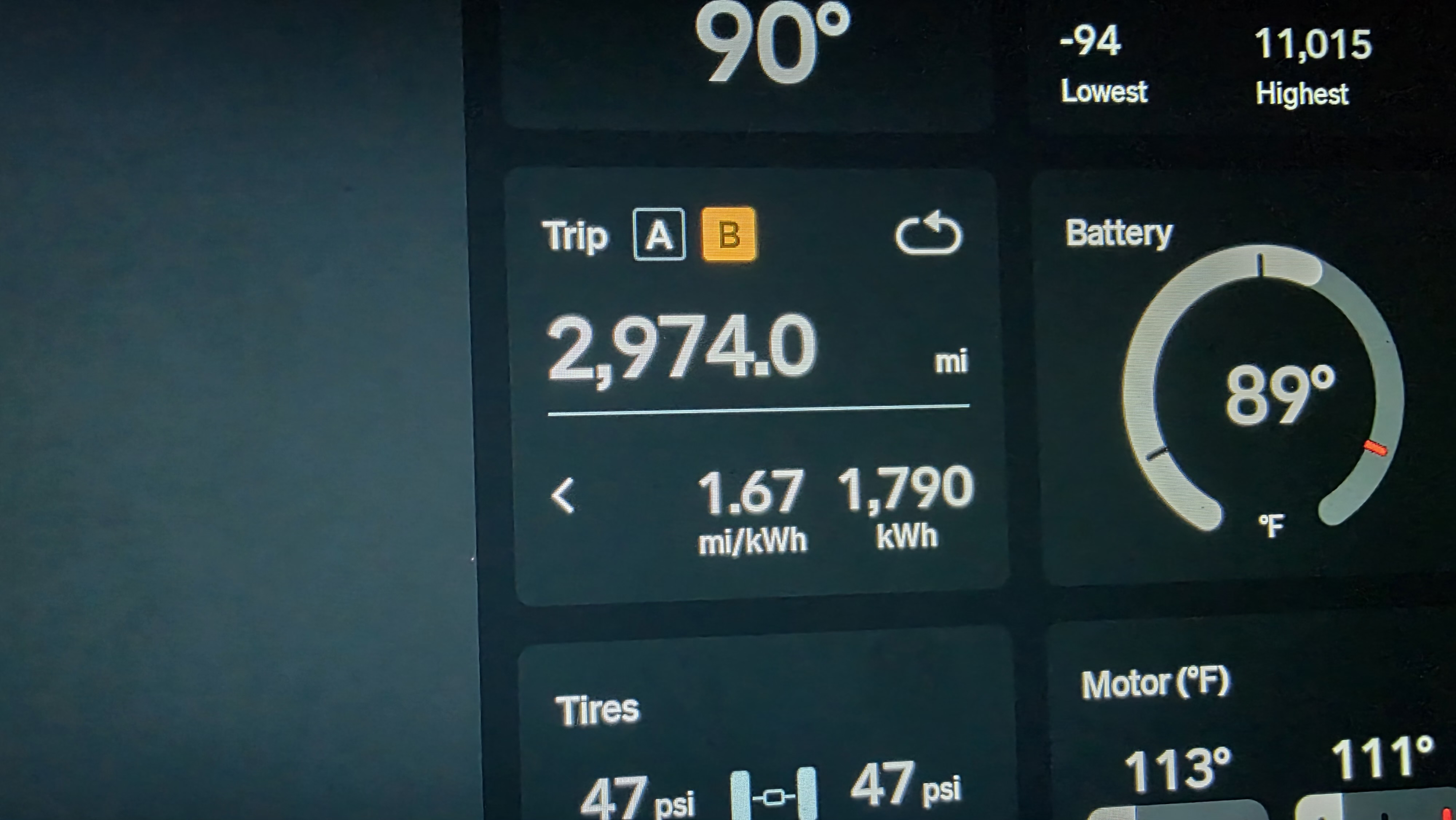
~3,000 Round Trip Miles · 7 Days on the Road · 11,113 Peak Altitude (ft) · 3 Mountain Passes · 0 Gas Stops
Outbound Route · I-90 → I-84 → I-15 → US-191 → I-70 → Denver#
- Seattle Area, WA — Departed ~1 PM · 99% charge · Korra installed in back seat · weather looking good · let’s go
- ⚡ Hermiston, OR — Electrify America · 52%→88% · 33 min · 121 mi added · $28.84
- ⚡ Island City, OR — Electrify America · 50%→85% · 30 min · dense fog at Deadman Pass just before this stop
- 🌙 Boise, ID — Night 1 · 454 miles · hotel booked en route · overnight L2 charge
- ⚡ Burley, ID — Tesla · 13%→77% · 37 min · 221 mi added · $39.85
- ⚡ Farr West, UT — Tesla · 13%→77% · 38 min · 219 mi added · $13.79 — best value stop of the trip!!
- 🌙 Salt Lake City, UT — Night 2 · 364 miles · Wasatch Front at dusk · overnight charge
- ⚡ Spanish Fork → Wellington, UT — Two stops through Price Canyon country
- ⚡⚡ Moab, UT — Unplanned detour · Charged twice · explored the canyon · almost stayed the night · no regrets
- 🌙 Grand Junction, CO — Night 3 · 339 miles · Gateway to Colorado · Korra: deeply satisfied
- ⚡ Edwards, CO — Tesla (Vail Valley) · Pre-summit charge · 26%→55% · 15 min · don’t skip this one
- ⚡ Frisco, CO — Tesla (9,097 ft) · Post-summit · I-70 traffic jam → Google reroutes → unplowed road → R1S handles it
- 🏔 Denver, CO — Arrived · 277 miles · Day 4 complete · 11,113 ft summit cleared · Korra: couch claimed
We Decided the Morning Of#
I’d been watching the weather for days. Late November in the Pacific Northwest and the Rockies? Not exactly predictable! The route from Seattle to Denver crosses three significant mountain passes, with Vail Pass on I-70 as the final boss. We were tracking forecasts obsessively — Snoqualmie Pass, the Blue Mountains in Oregon, the Wasatch Range, the Rockies.
The morning of November 26th, things looked good. Cold but clear. We made the call! Packed up, loaded Korra, and just… went. We booked every hotel on the road, the morning we needed it. No reservations. No agenda. Just a weather window and a Rivian.
Day One — Seattle to Boise: Fog at Deadman Pass#
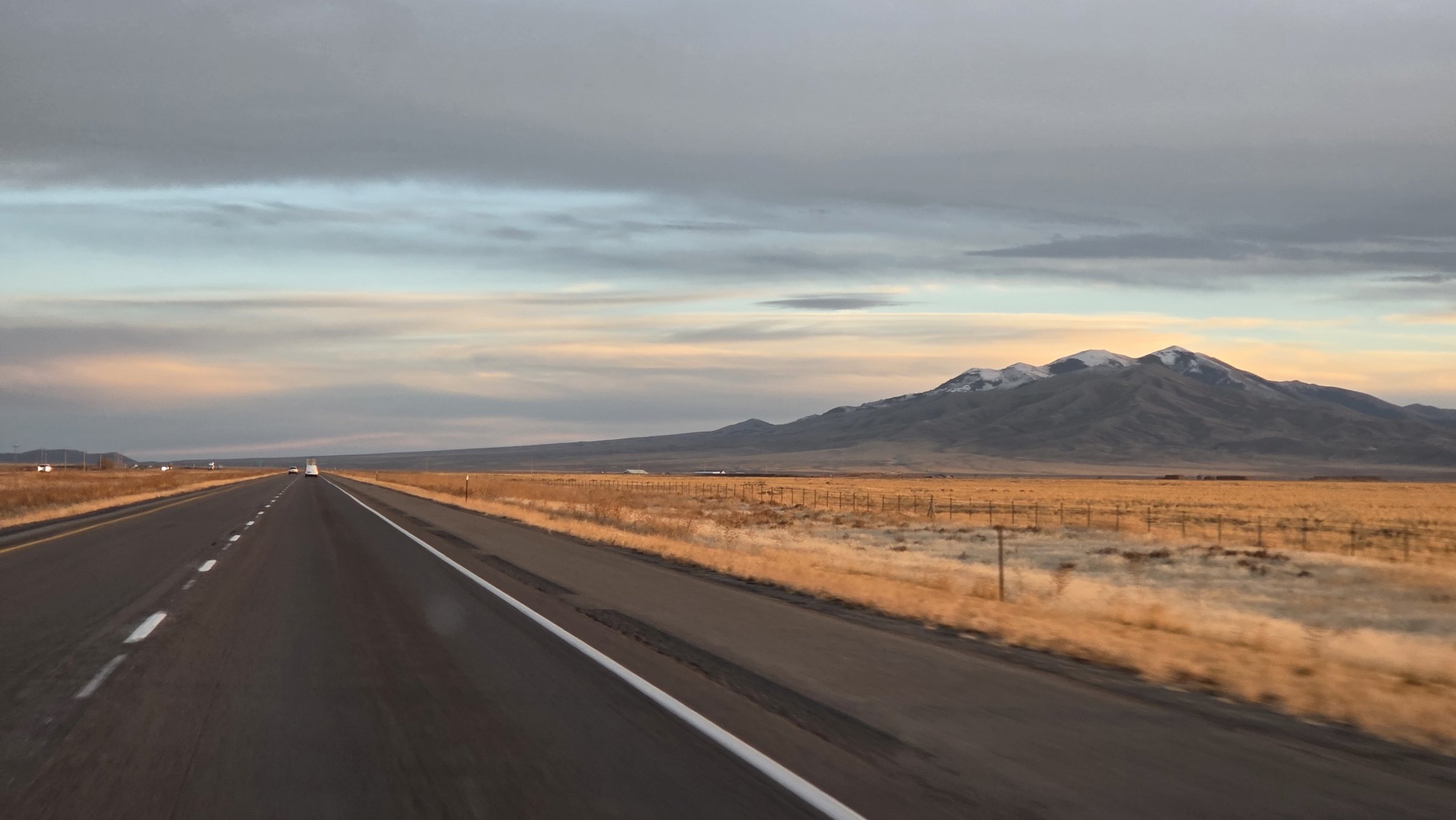
Left around 1 PM, leisurely by design. We take I-90 east to Yakima, south on I-82 through the valley, then I-84 into Oregon, destination Boise for the first night. The landscape isn’t your most beautiful but it isn’t boring either.
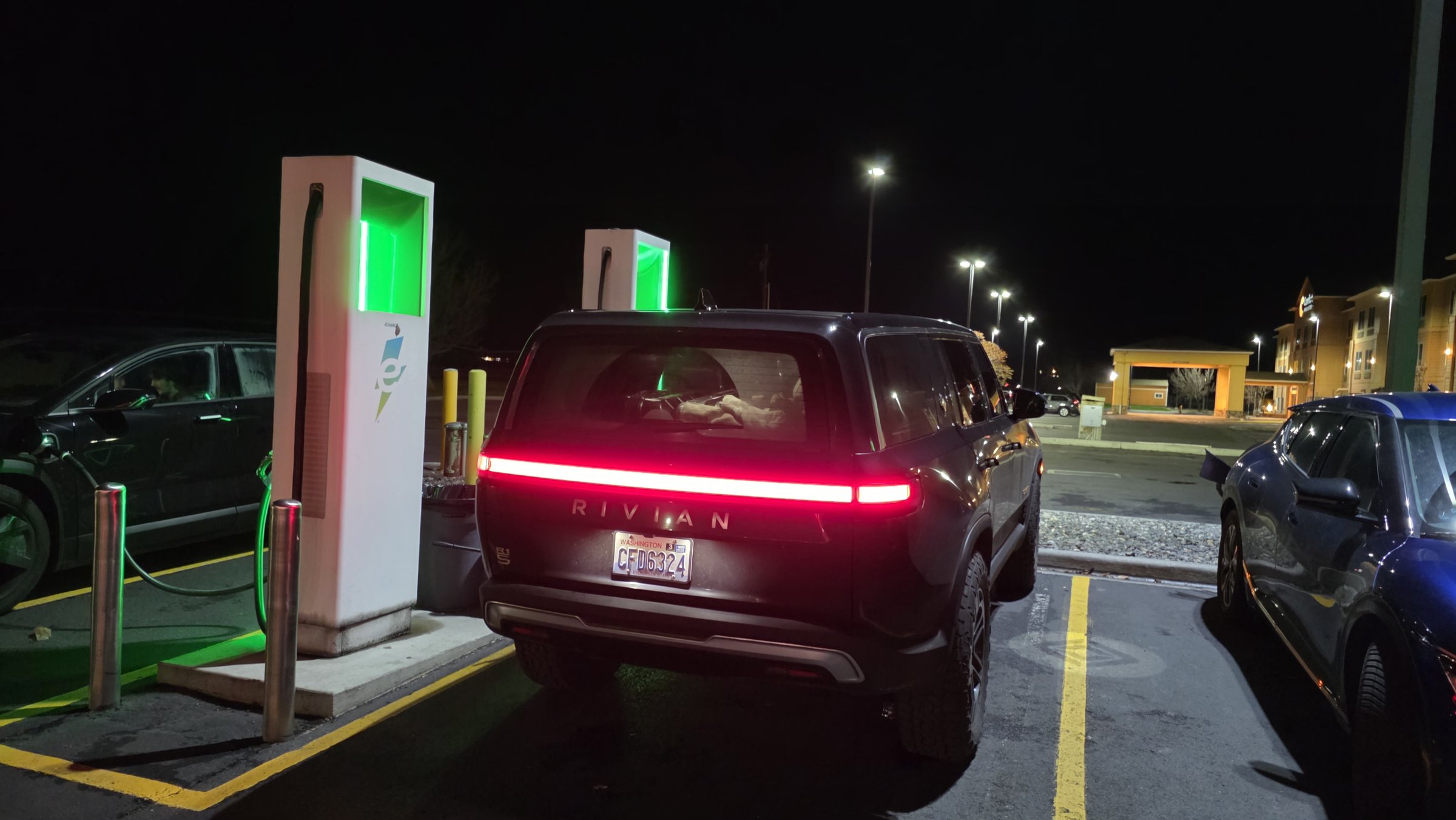
First charge: Hermiston, Oregon. Electrify America, 33 minutes, 121 miles added. We walked Korra, grabbed food, didn’t rush. This is the thing about EV road trips that people who haven’t done one don’t understand — the charging stops aren’t the inconvenience. They’re the structure! You get out of the car. You move. You eat actual food instead of drive-through. You walk the dog. You arrive at your destination less destroyed than you would have otherwise.
On the 2024 trip I was grinding through charging stops like a gas station — minimize time, get back on the road. This trip I let them breathe. Thirty minutes at Hermiston: Korra walk, coffee, food. Thirty-eight minutes at Farr West in Utah: same. You arrive at your overnight stop actually relaxed! This alone is worth doing the trip in four days instead of two.
Then came Deadman Pass. East of Pendleton on I-84, in the dark, dense fog rolling in off the Blue Mountains. Visibility dropped hard. We slowed down, stayed calm, and pressed through. The most tense twenty minutes of the outbound trip! Not because anything went wrong, but because it’s the kind of stretch where you understand why you watch the forecast. We’d checked. We knew it was coming. We got through it.
If you’re running this route in November or December, check the ODOT TripCheck cameras before you get to Pendleton! The fog we hit was dense but manageable. Ice would have been a different story.
Island City charge, then into Idaho. Boise by night. 454 miles on day one, and we weren’t tired. That’s the difference!!
Day Two — Boise to Salt Lake City: Idaho Long and Utah Surprise#
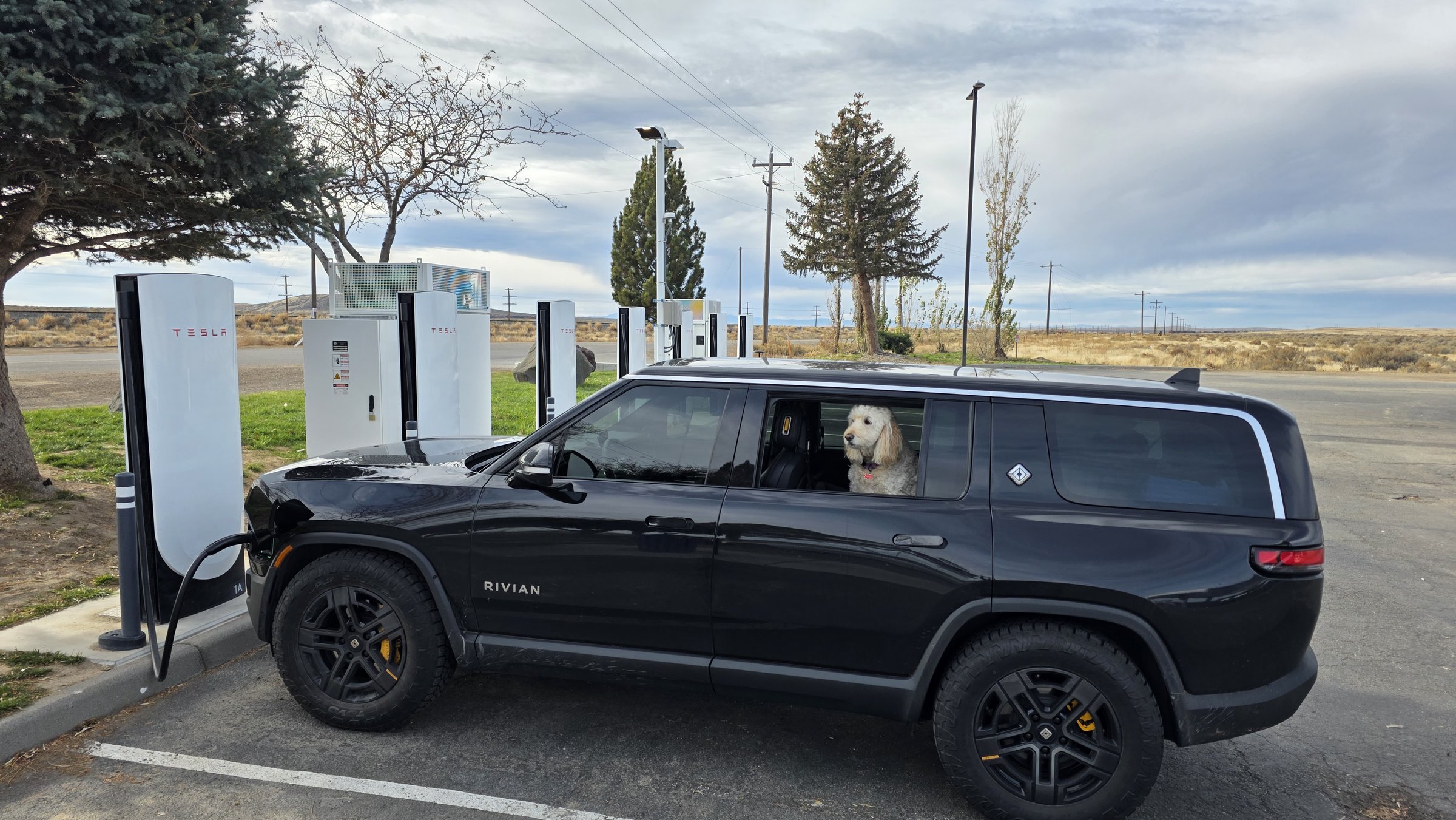
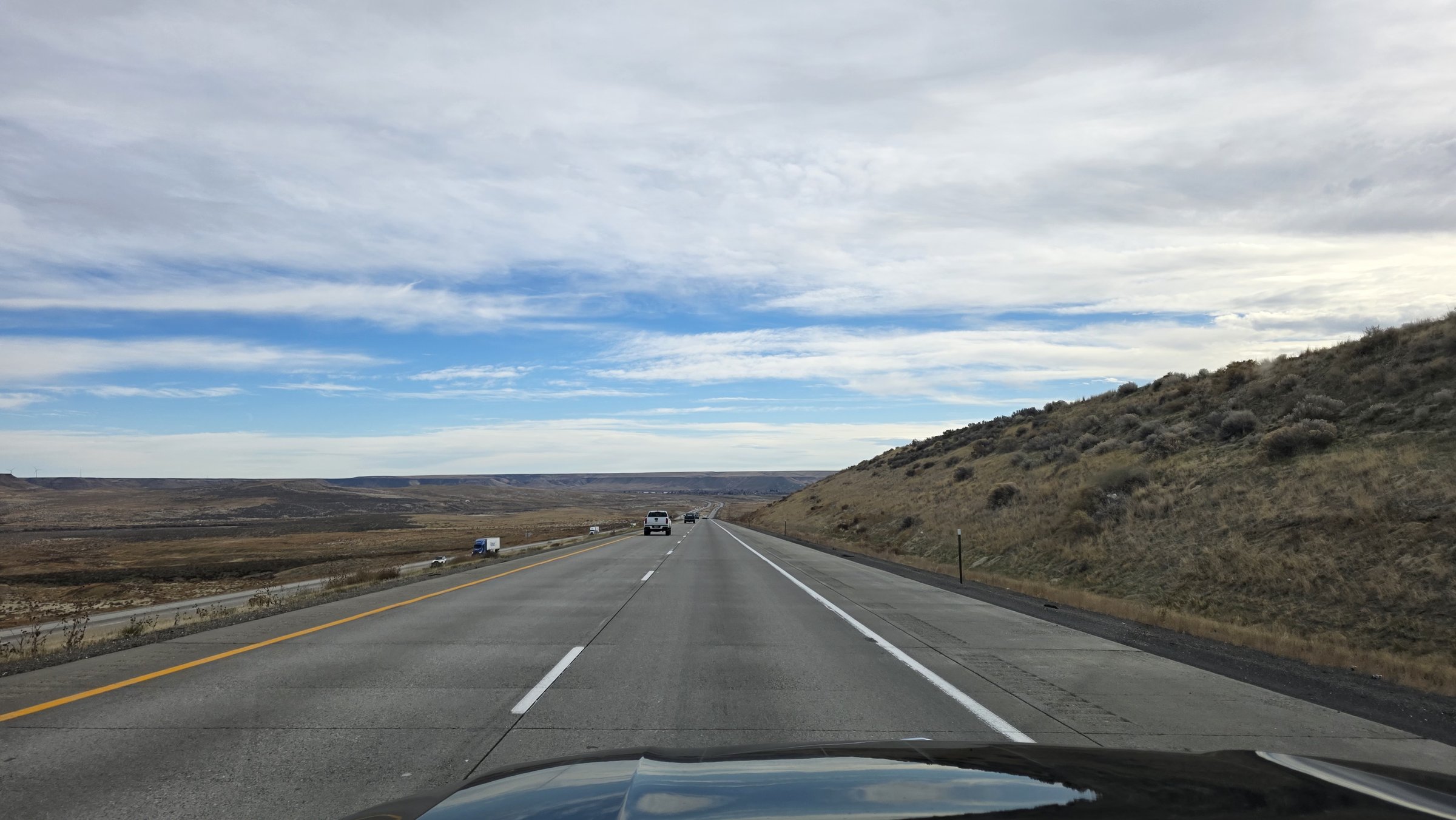
Day two is the Idaho day. The Snake River Plain opens up and stays open for a long time. There’s something meditative about it — cruise control set, big sky, Korra doing her slow rotation between the back seat configurations she’s identified as optimal. Burley for a hard charge (13% to 77%, 37 minutes, 221 miles added) and then south into Utah.
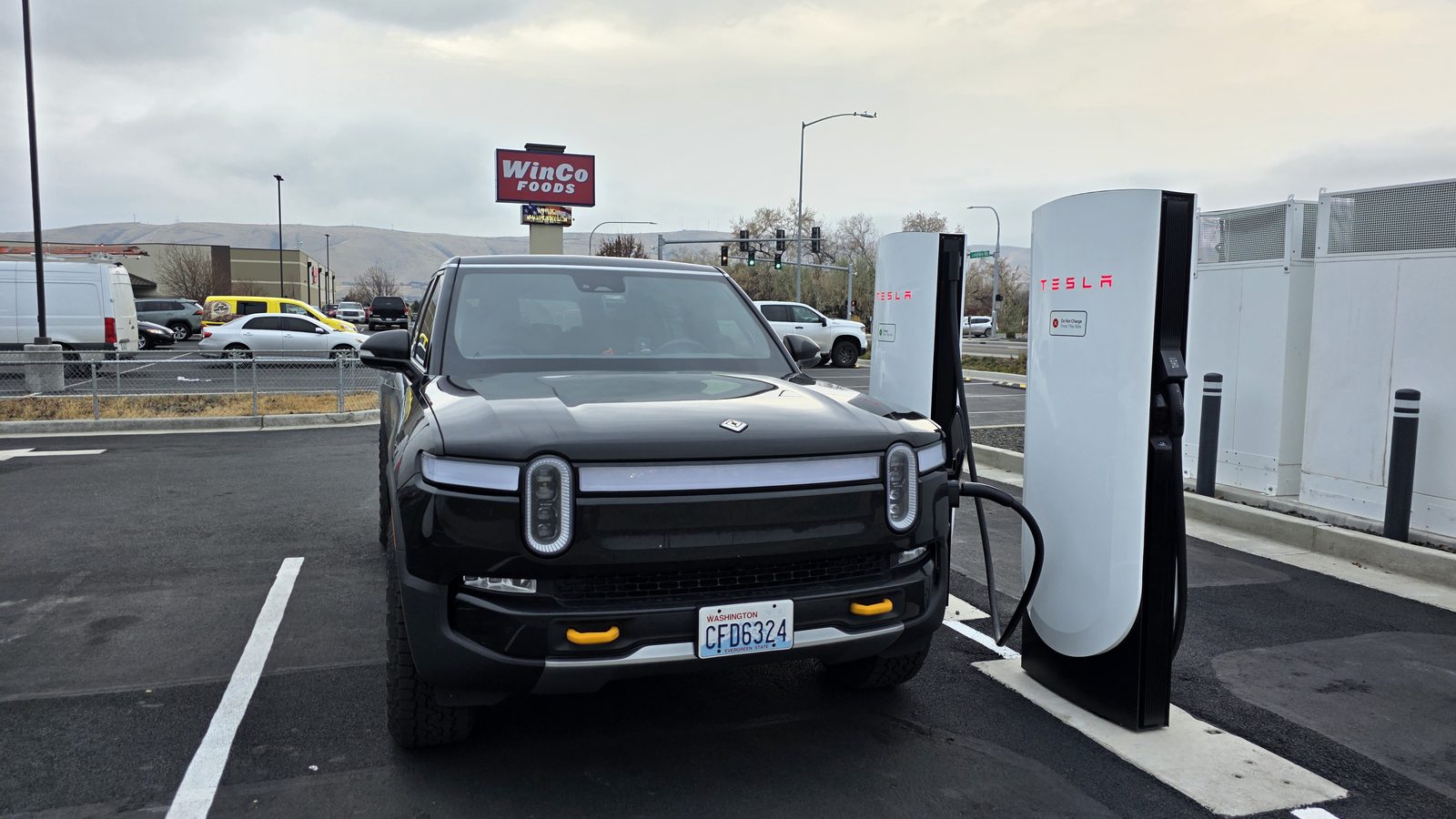
The Farr West stop just north of Ogden was the pleasant surprise of the outbound trip! Same charge depth as Burley, 219 miles added in 38 minutes, but only $13.79!! Tesla utility pricing in Utah is dramatically lower than Electrify America. If you’re routing this corridor, run your long Utah charges through Tesla wherever the network allows. The delta is significant!
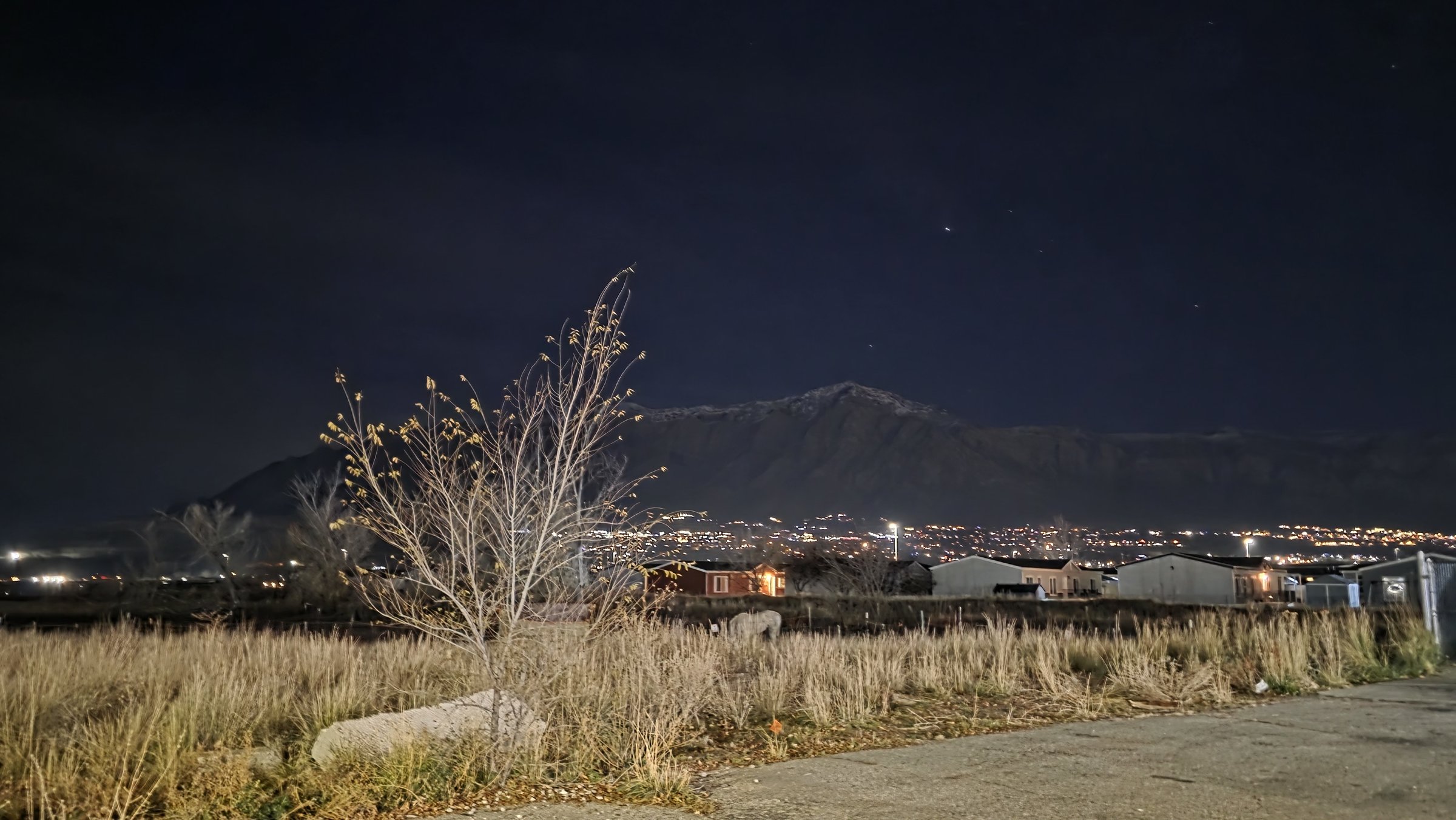
Salt Lake City at dusk, the Wasatch Front catching the last of the light. We booked a hotel, checked in, walked Korra around whatever park was closest. Day two done. 364 miles, zero stress.
Day Three — Salt Lake to Grand Junction: Moab Wasn’t the Plan#
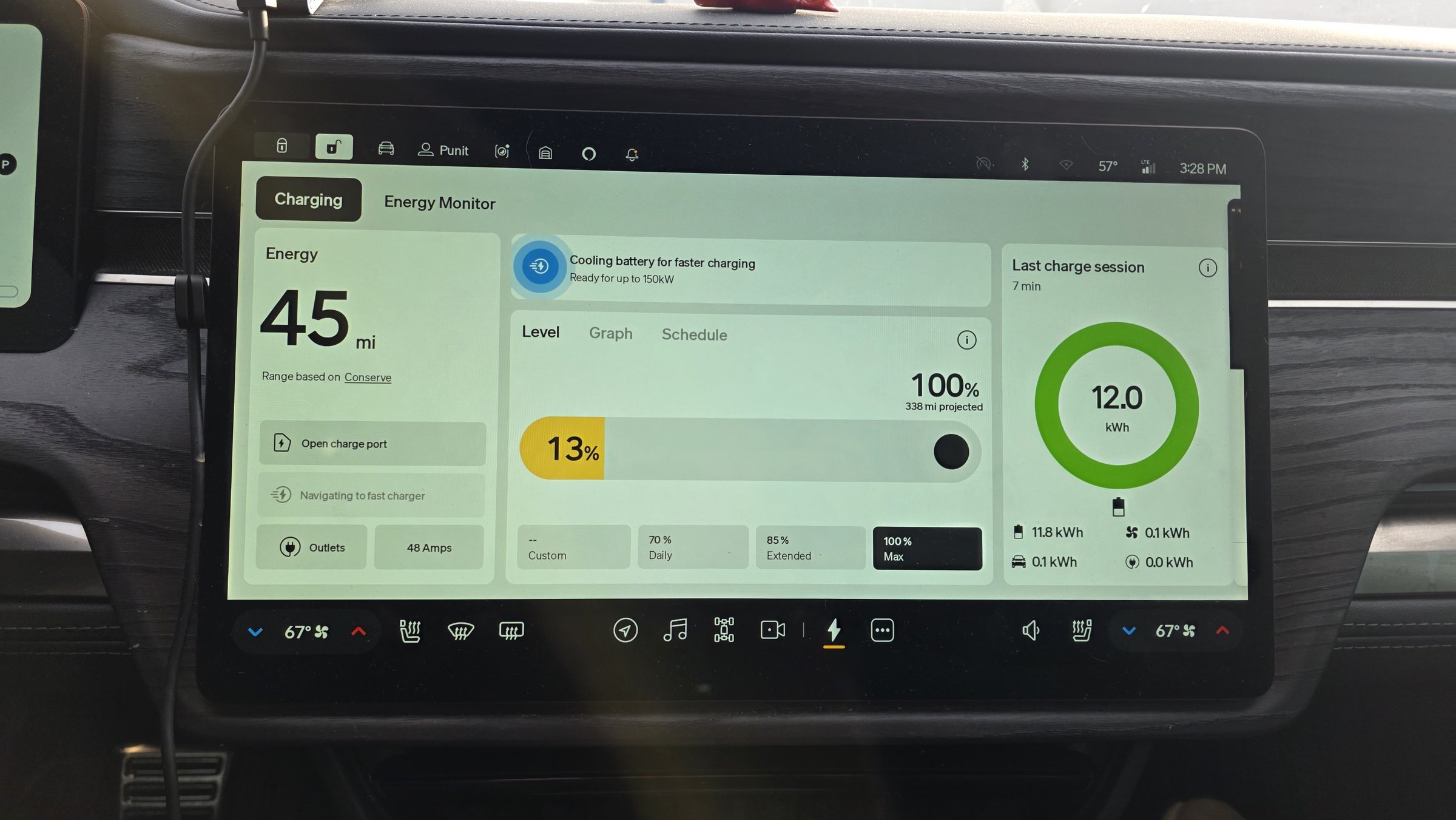
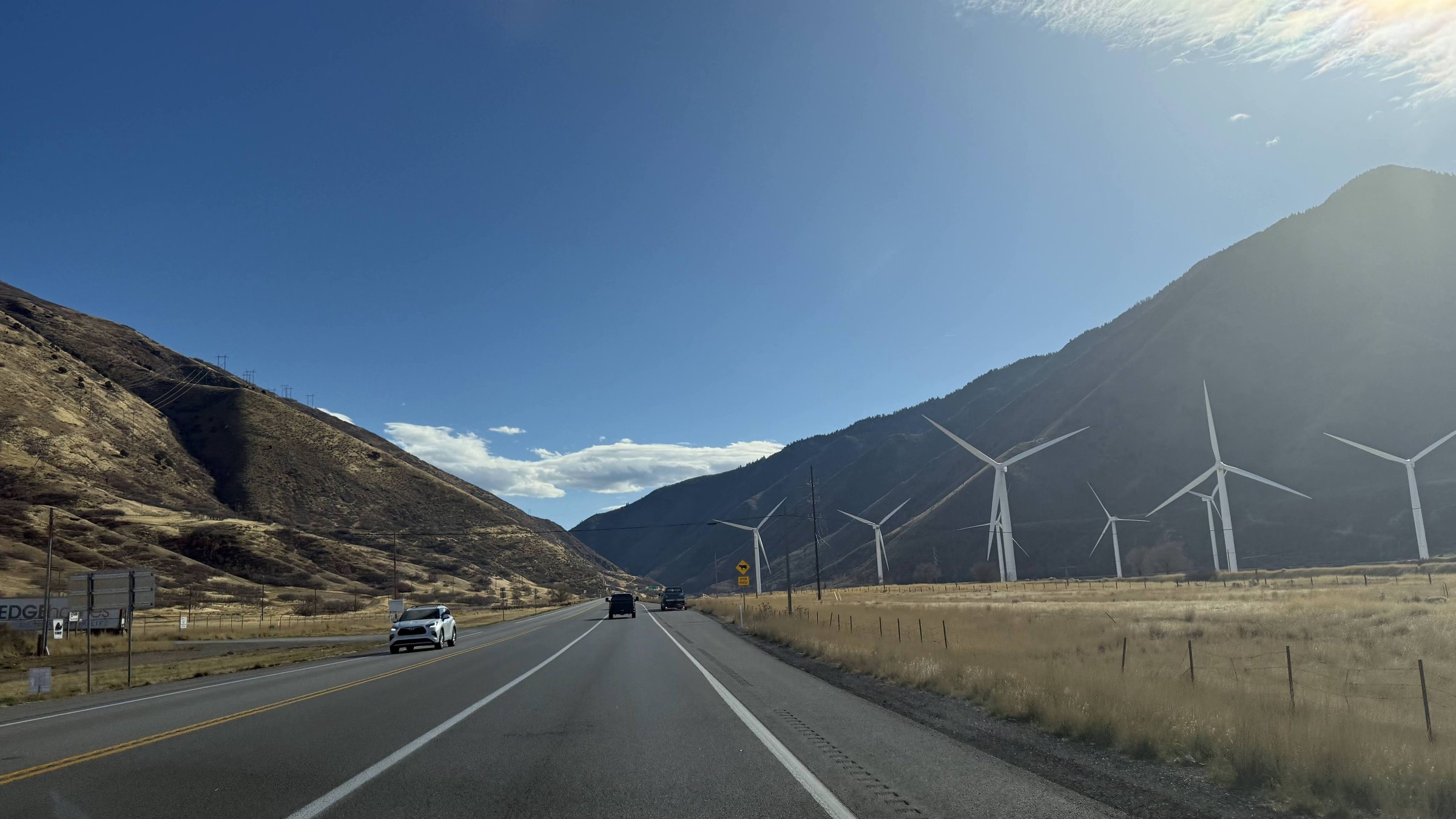
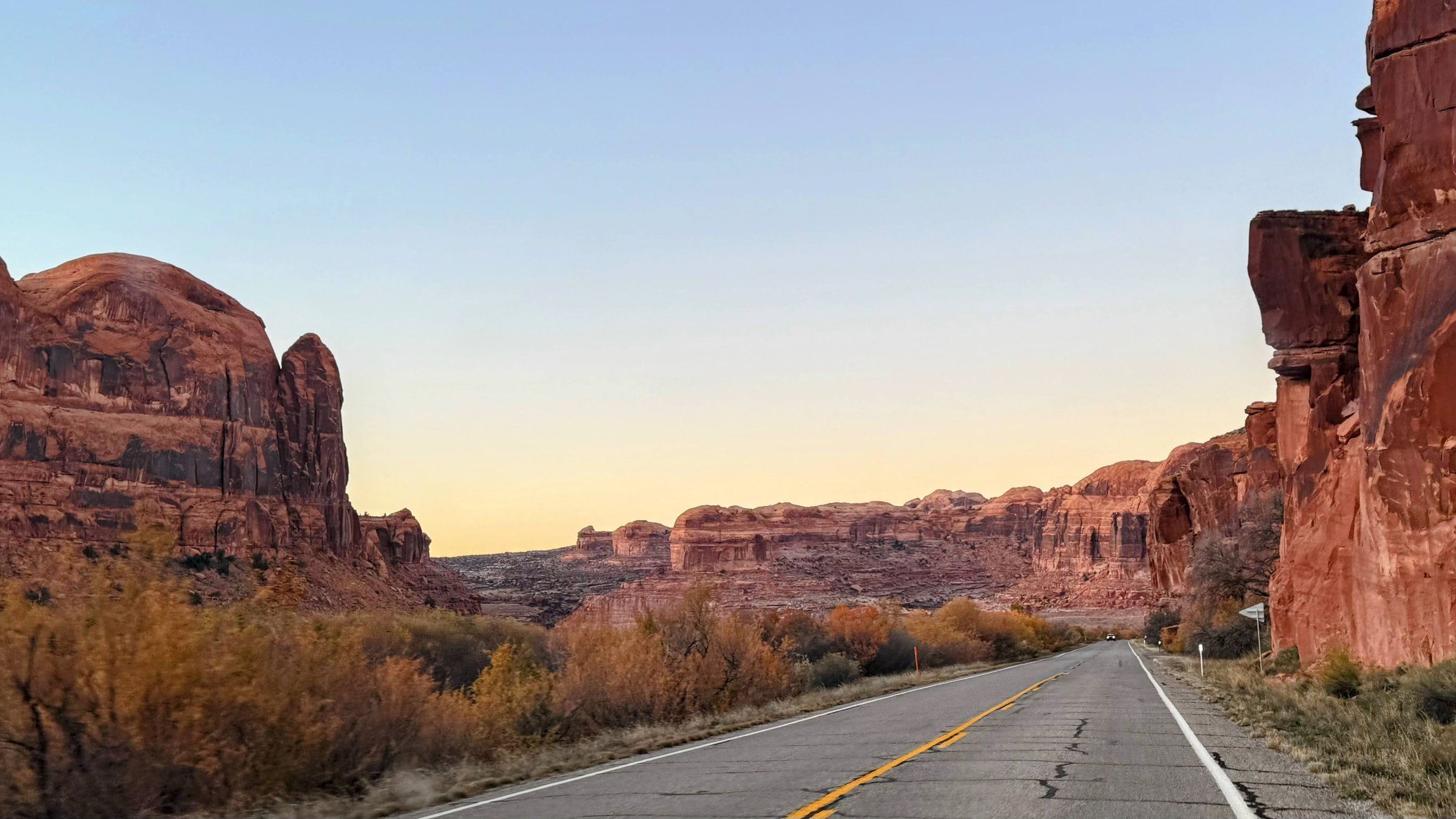
South through Utah is where the landscape starts doing things! Spanish Fork and the Price Canyon stretch — canyon walls pressing in, the terrain getting dramatic and red. We charged at Spanish Fork and Wellington, both uneventful in the best way, and kept heading south.
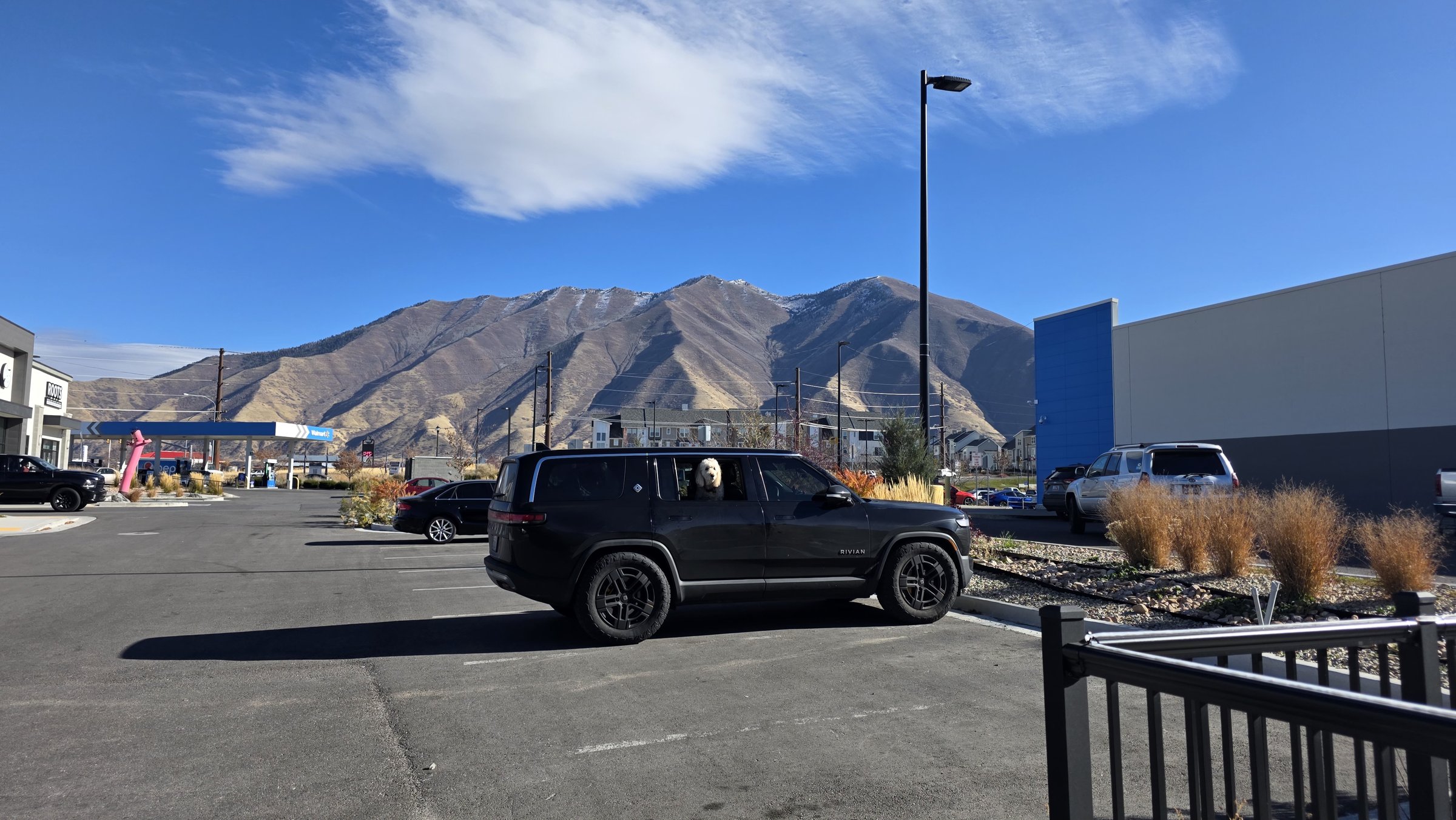
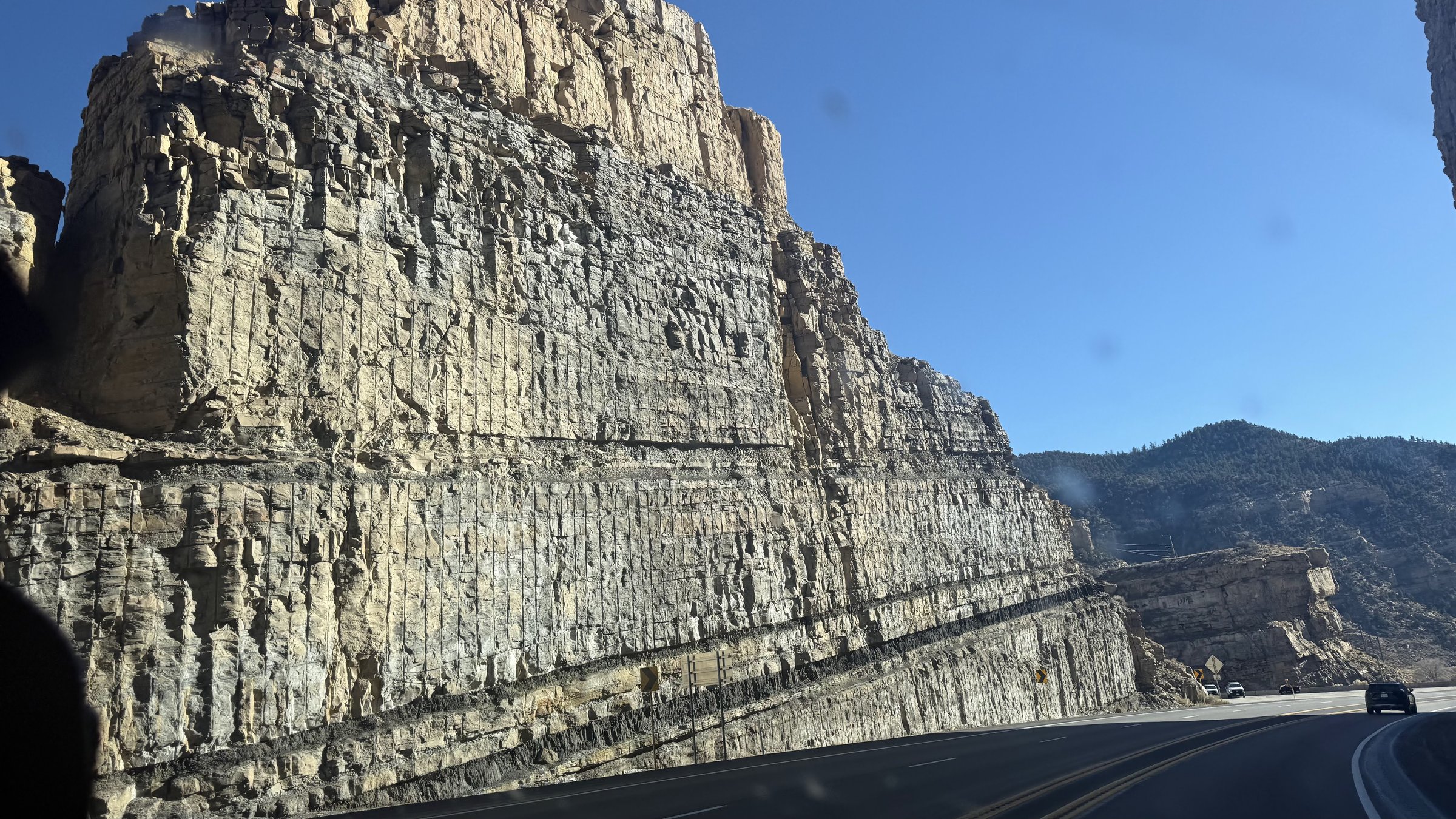
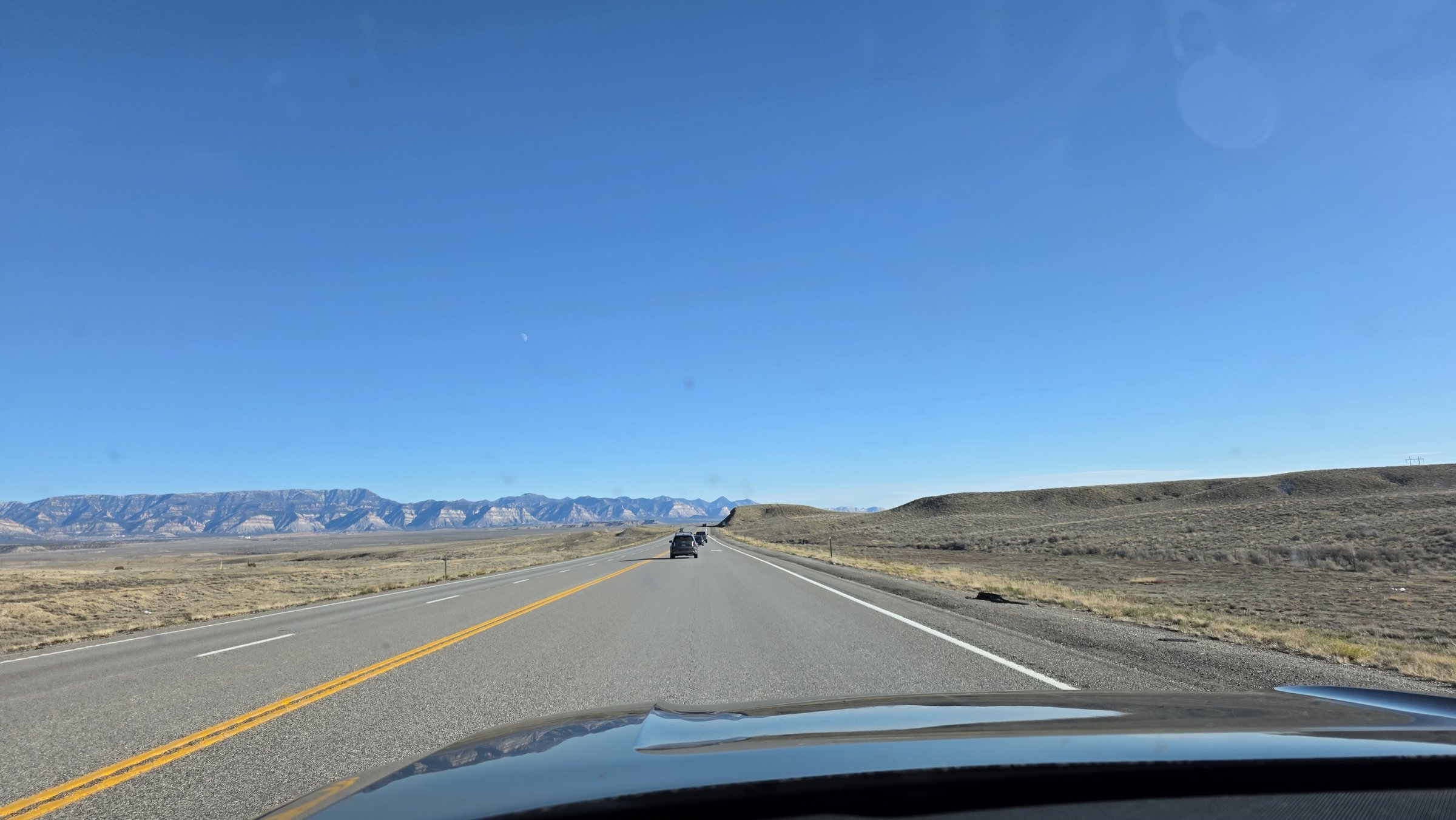
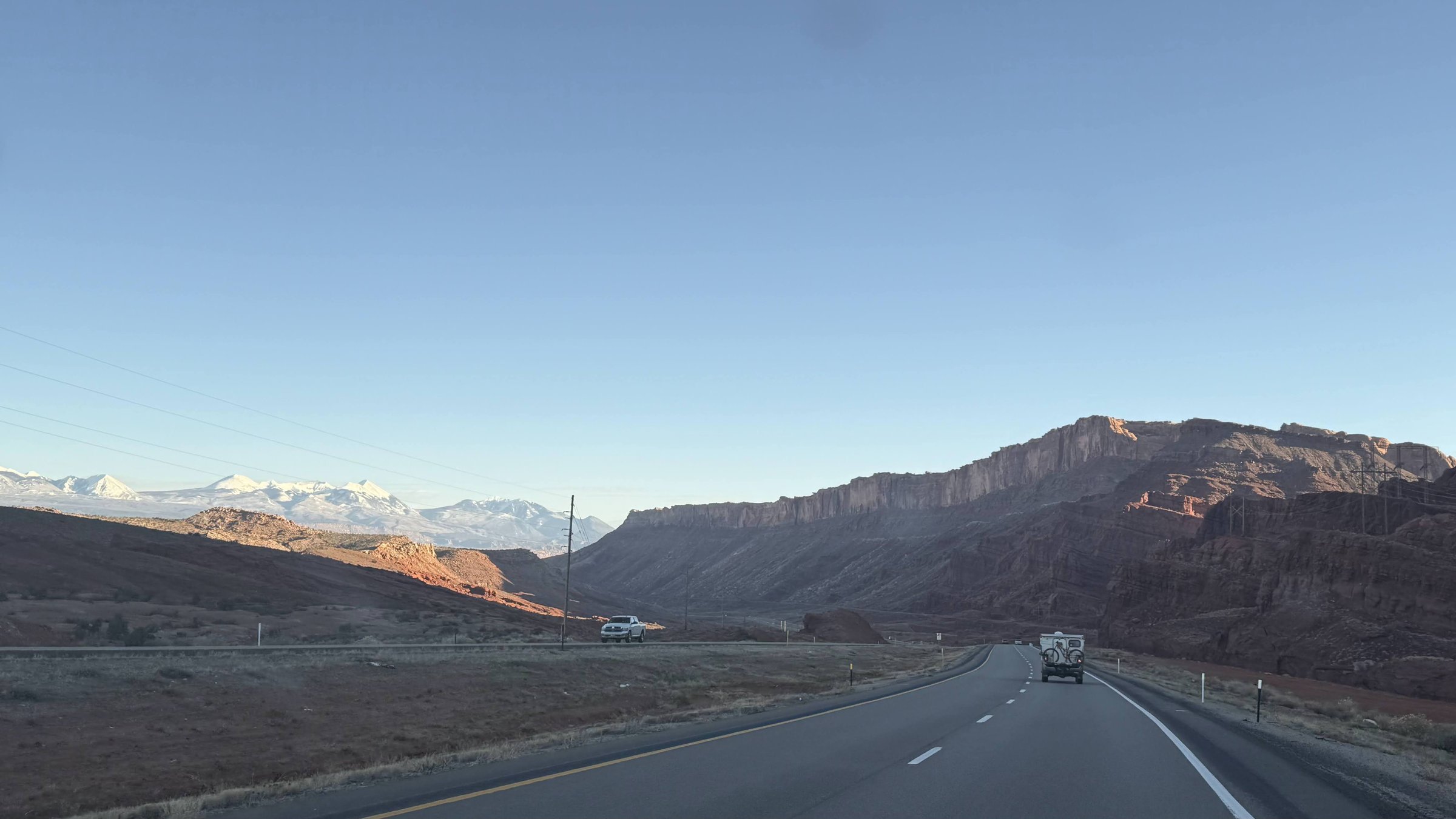
We had range. Moab was a detour but not a crazy one. I love Moab! We’ve been there before and I think about it more than is probably reasonable for someone who doesn’t live in Utah. So when we had battery to spare and the sign was right there, the conversation was short.
The best thing about range confidence? It lets you say yes to the detour!!
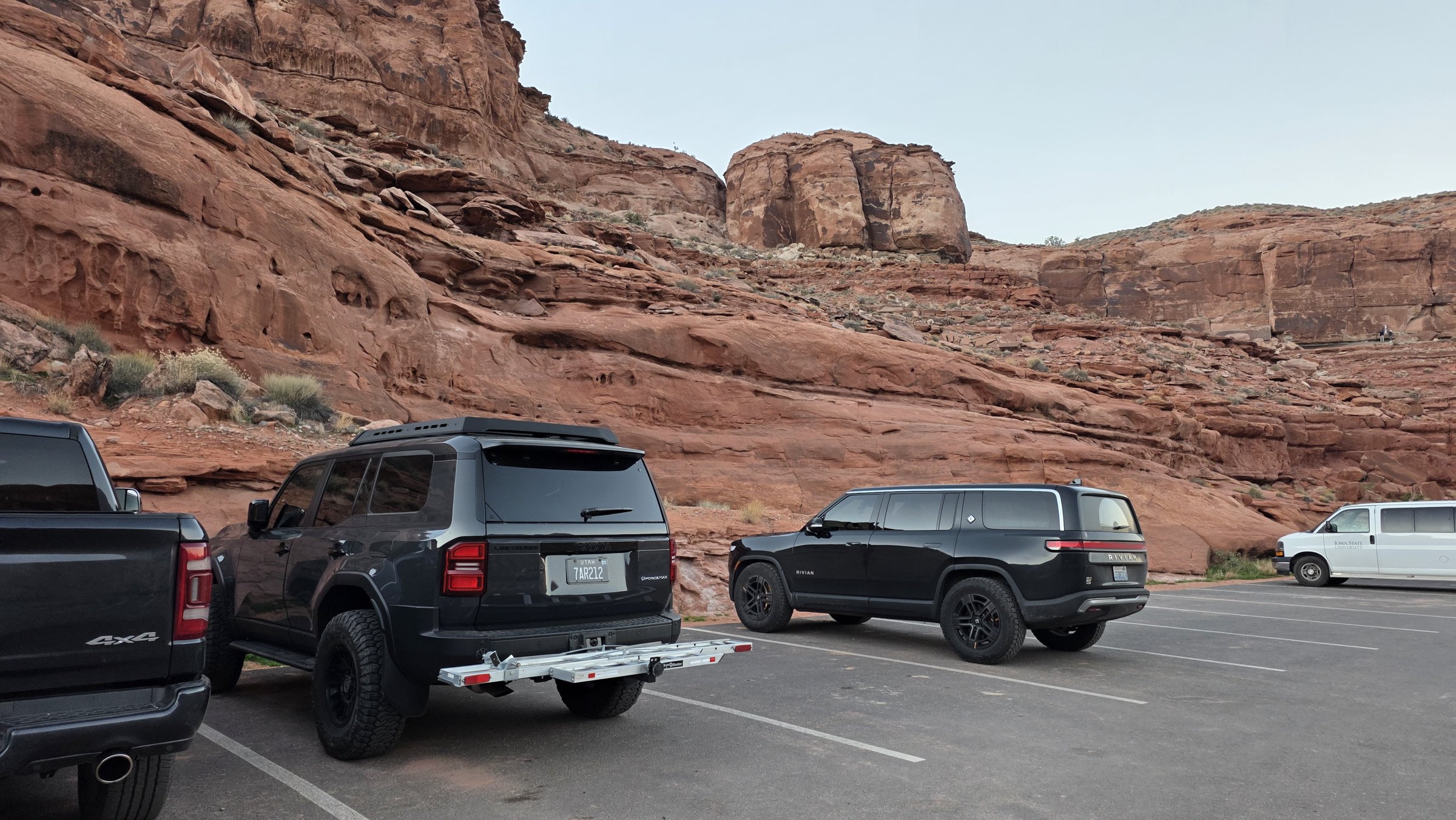
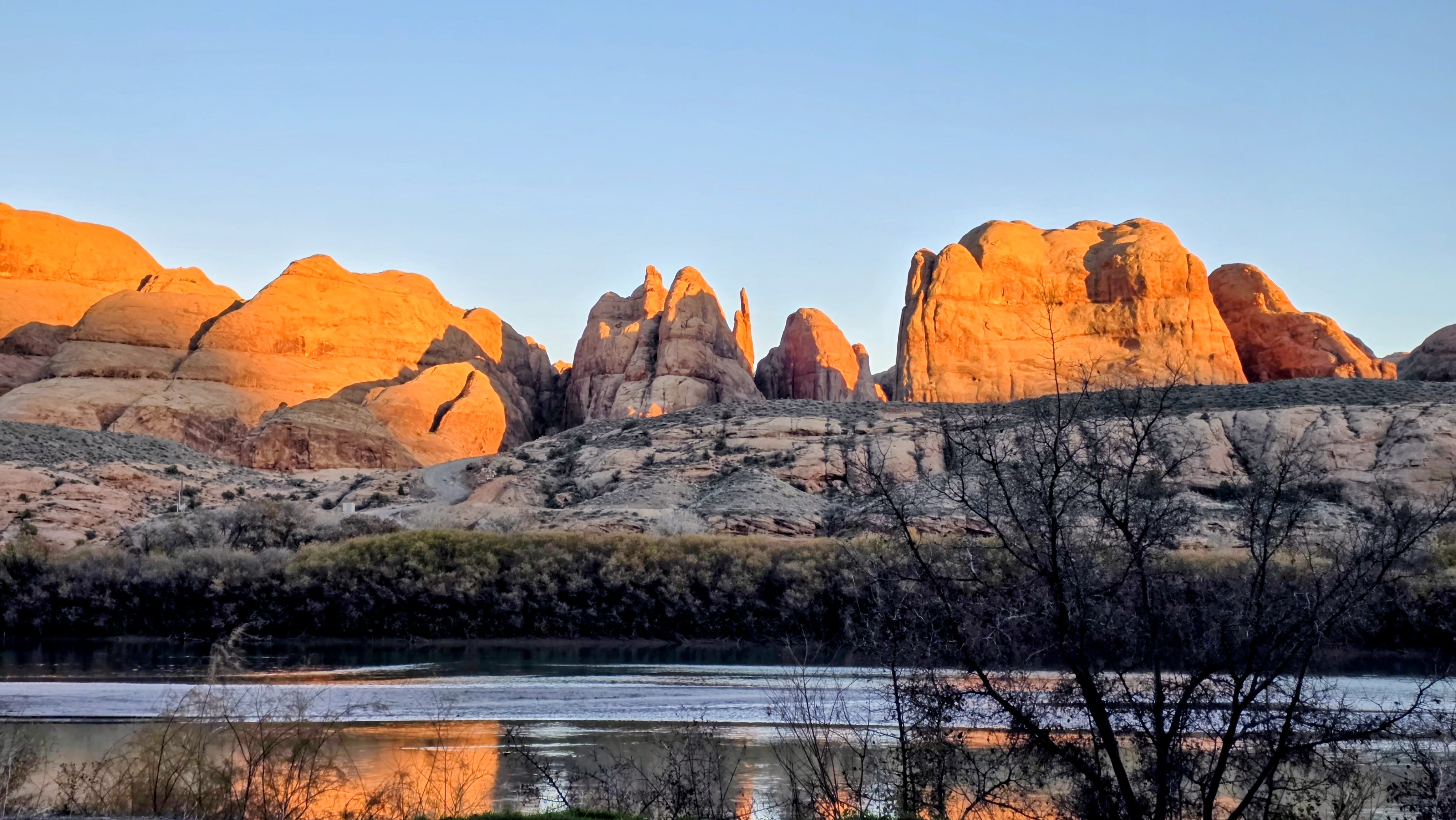
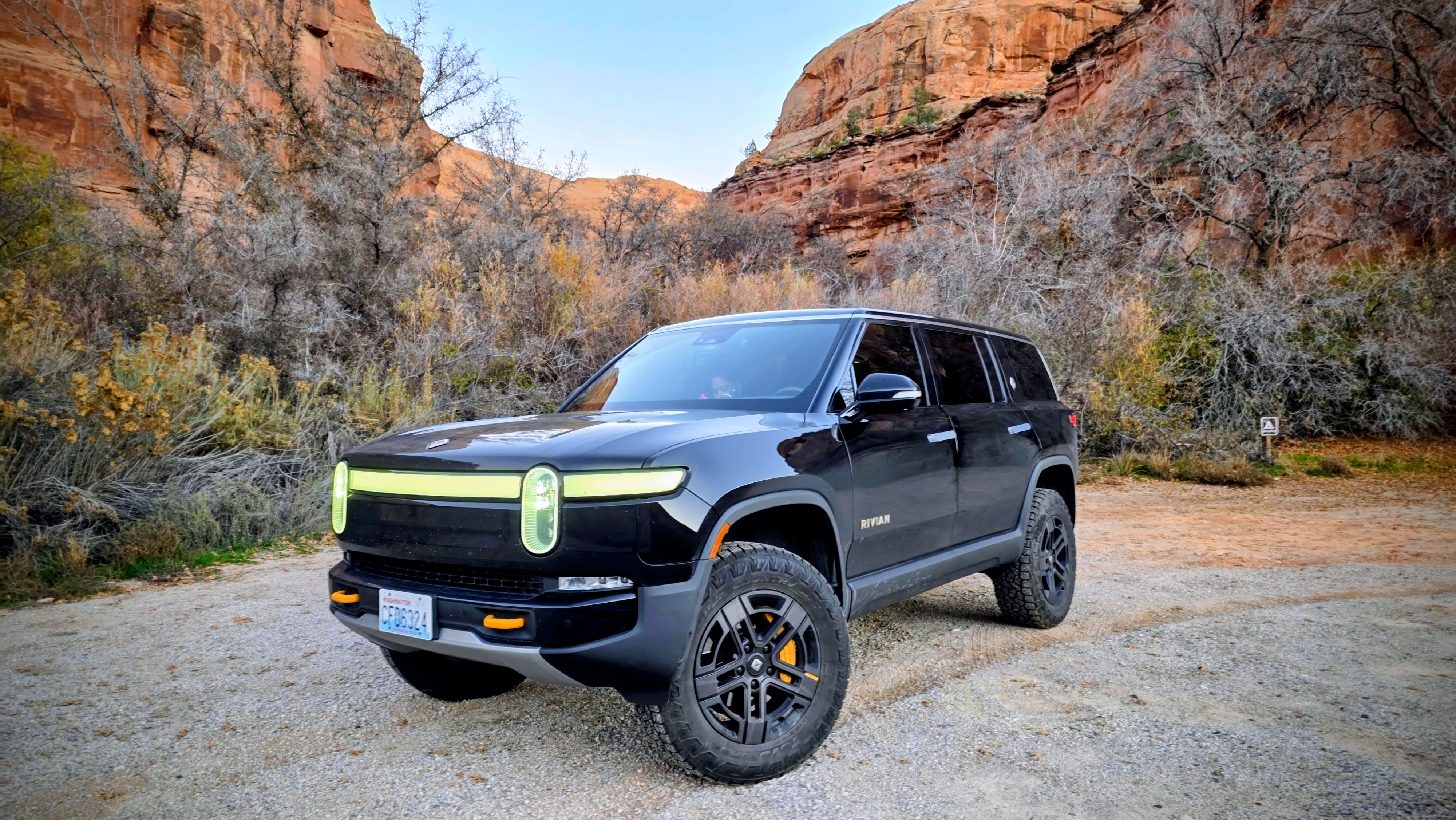
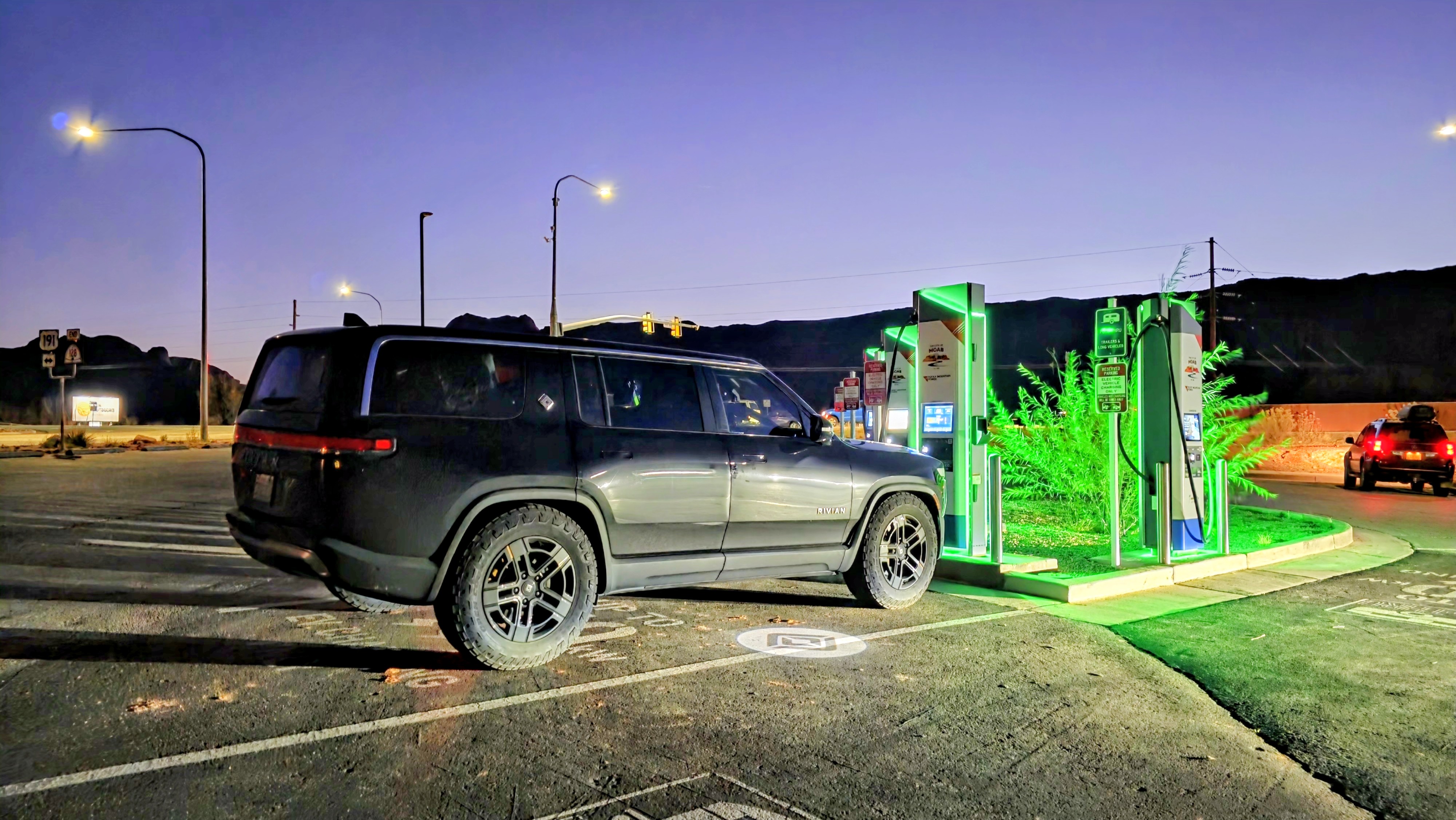
We charged at the RMP Electrify America station in Moab twice — once on arrival, once before leaving. This charger in Moab is so cool, charge up before you go on off-roading adventures! We did go through two not-so-busy Tesla Superchargers, both V3, so decided to go to the faster EA charger. We drove the Potash road for some pictures and did a short hike in the red rock. Afternoon light on red rock in late November is something. Korra did not want to leave! She was happy roaming the trails, sniffing the new landscape at dusk. We almost stayed the night, but eventually decided we’d push to Grand Junction to stay on schedule for the Vail crossing. I still think about not staying. We’ll be back and spend some real time in Moab. The R1S was in its element there even though we didn’t get to take it offroading!
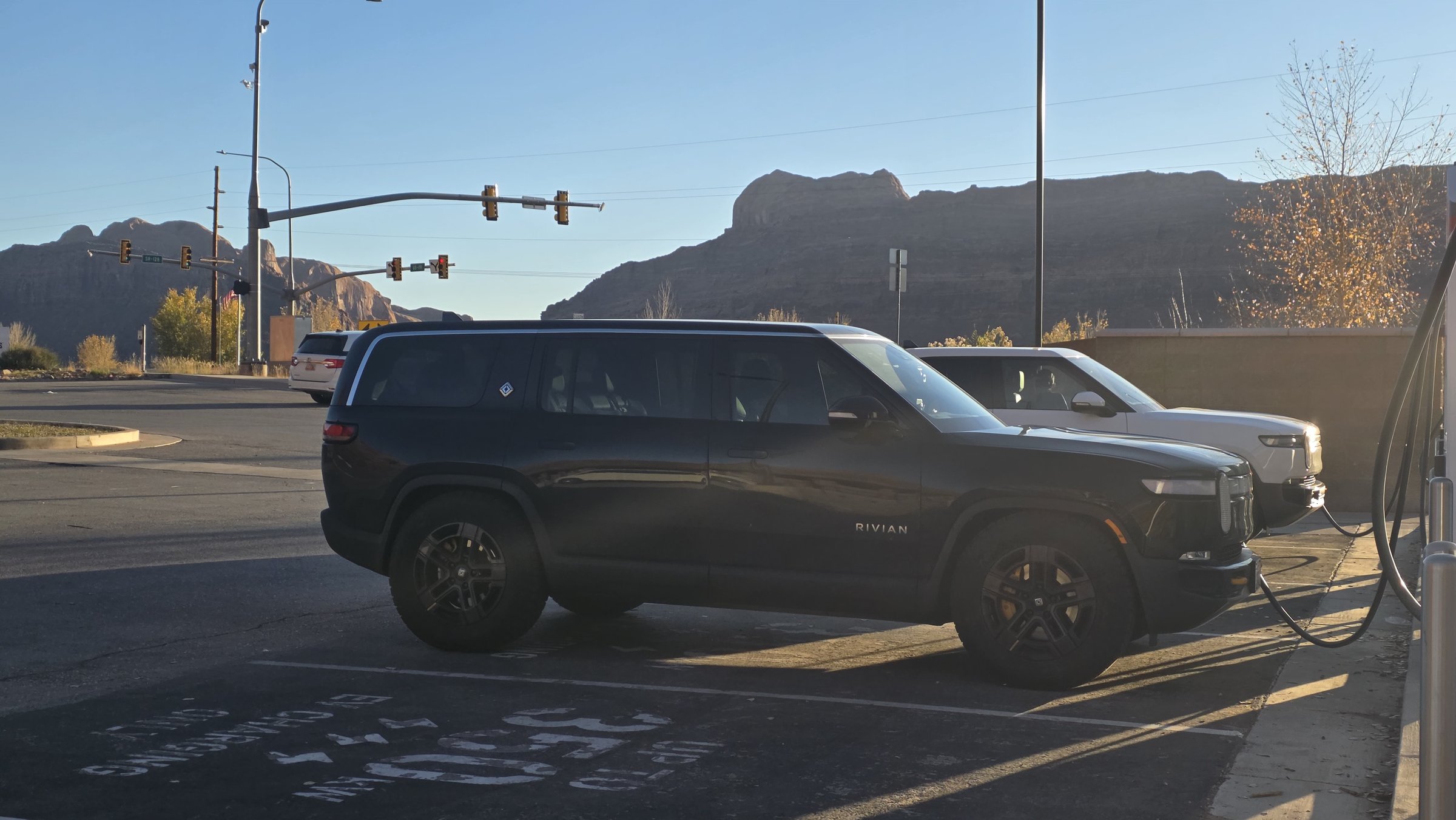
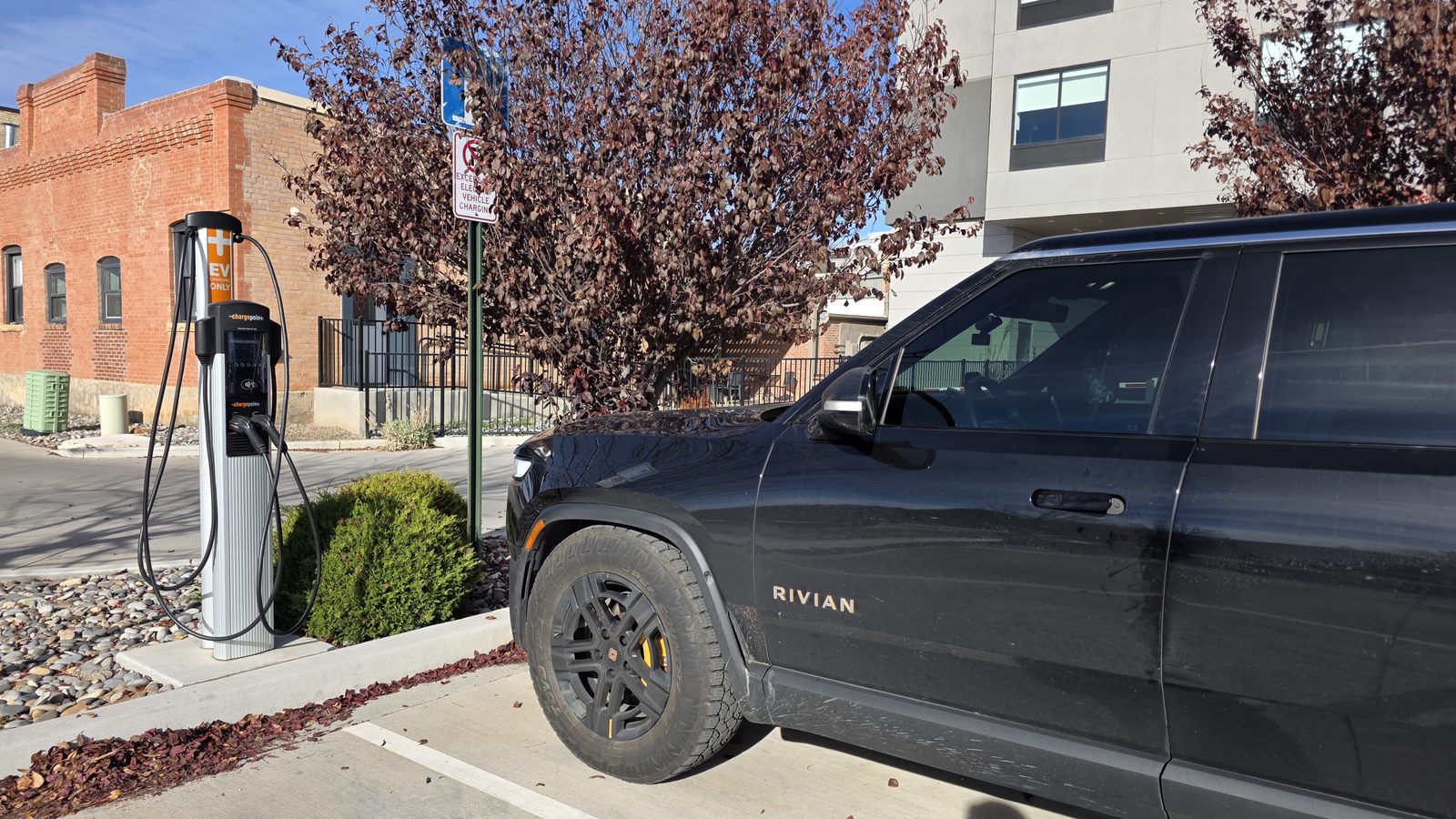
Found a hotel with a level 2 charger in downtown Grand Junction and let the car charge close to 100% overnight.
Day Four — Grand Junction to Denver: The Final Boss#
I-70 east from Grand Junction through Glenwood Canyon is by far my most favorite drive!! The Colorado River running alongside, canyon walls rising hundreds of feet on both sides, tunnels carved through solid rock and the winding road — the Rivian becomes a true canyon carver. Having lived in Colorado 10 years before, we have done this stretch a number of times. Man, I miss this road!
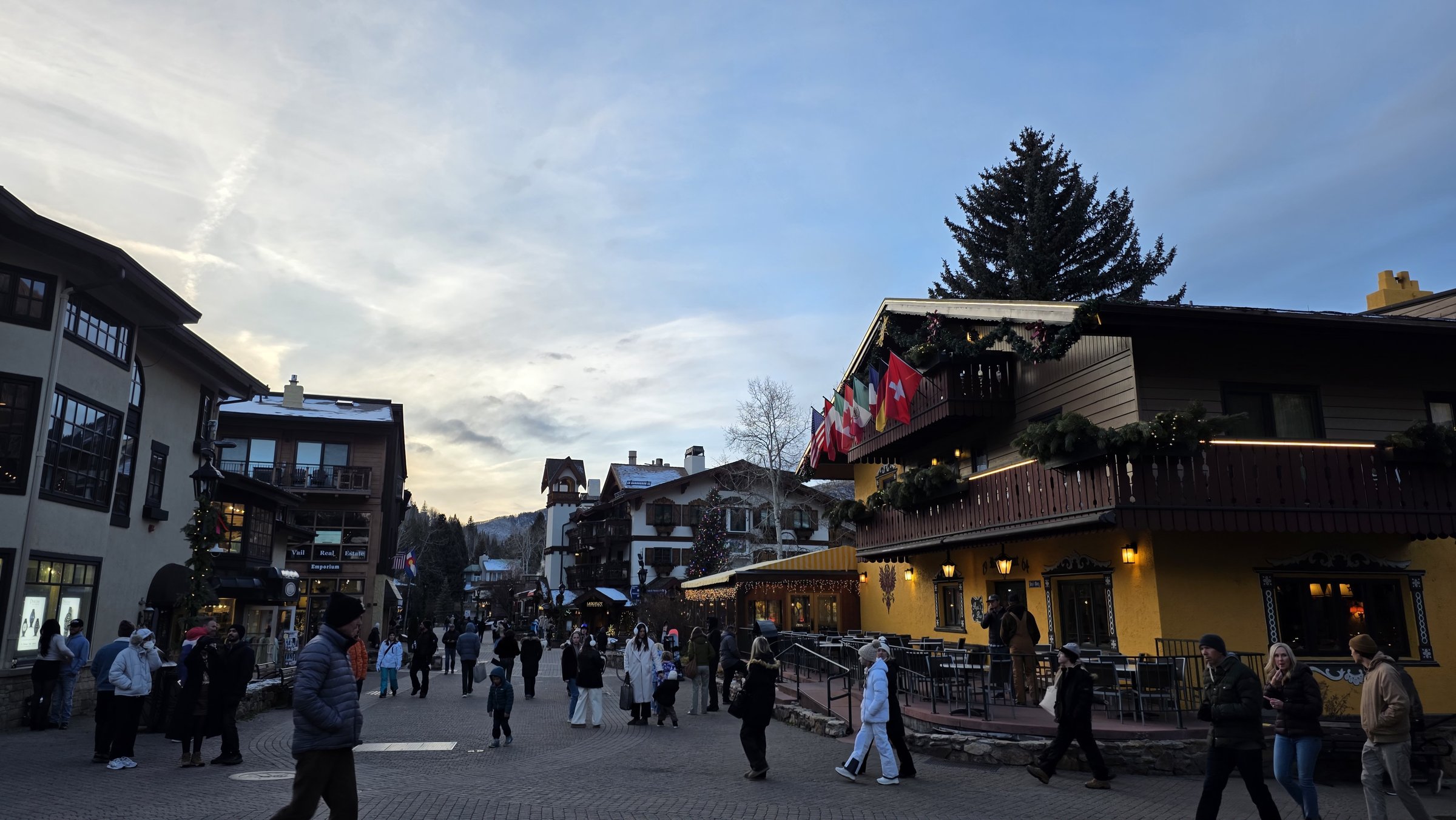
Once through the Canyon, the terrain opens into the Vail Valley and the mountains start building toward something. We spent a couple of hours walking in the town of Vail, clicking pictures, reminiscing of old times. We left after it was already dark.
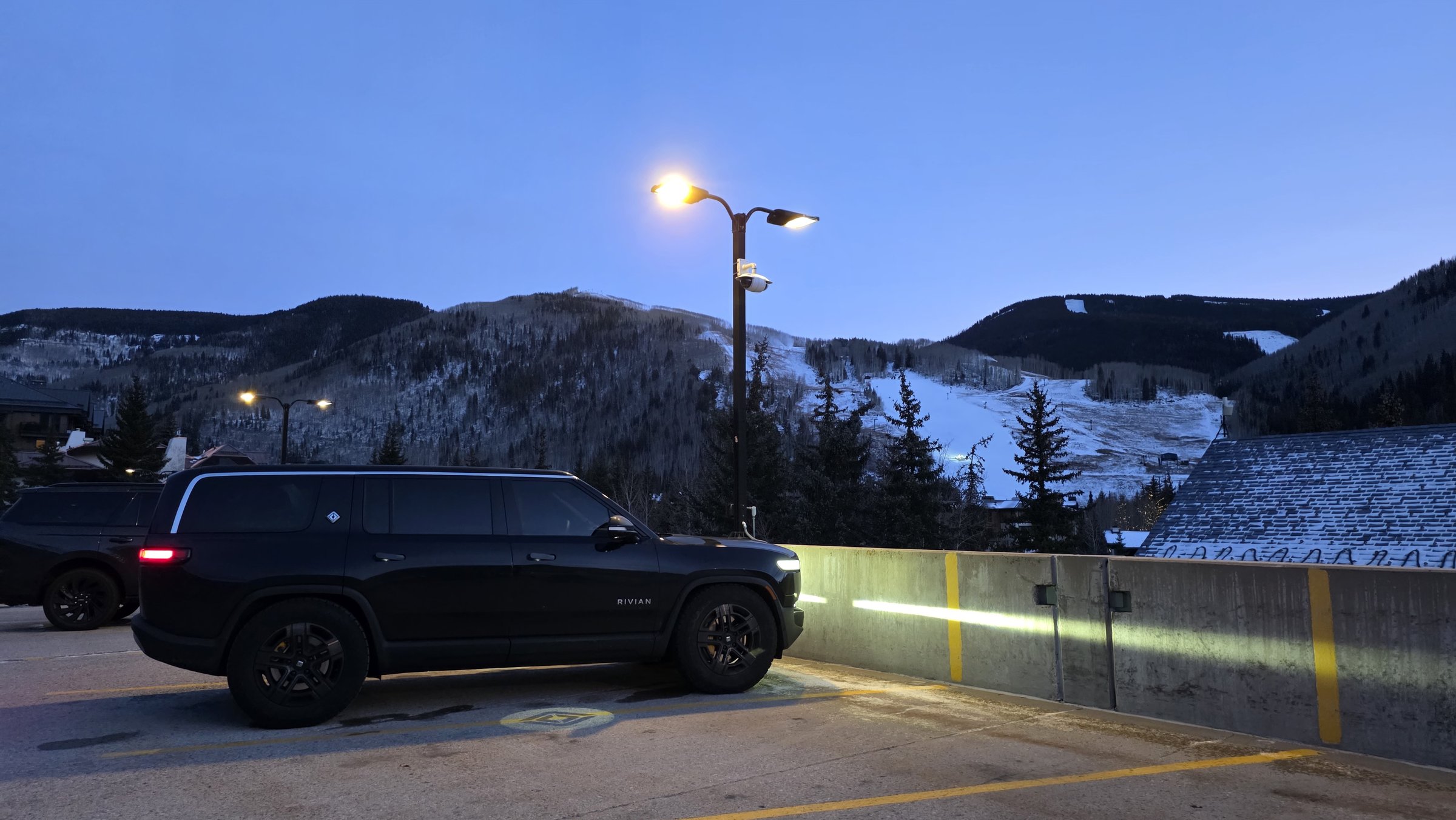
Vail Pass is the final boss!! Eisenhower Tunnel at 11,013 feet, highway summit at 11,113 — the highest point on the entire US Interstate system! In late November, after dark, with a dusting of snow on the ground, it demands respect. We charged at Edwards in the Vail Valley specifically so we’d hit the summit with plenty of margin. That stop is not optional on this route in winter. Don’t skip it!
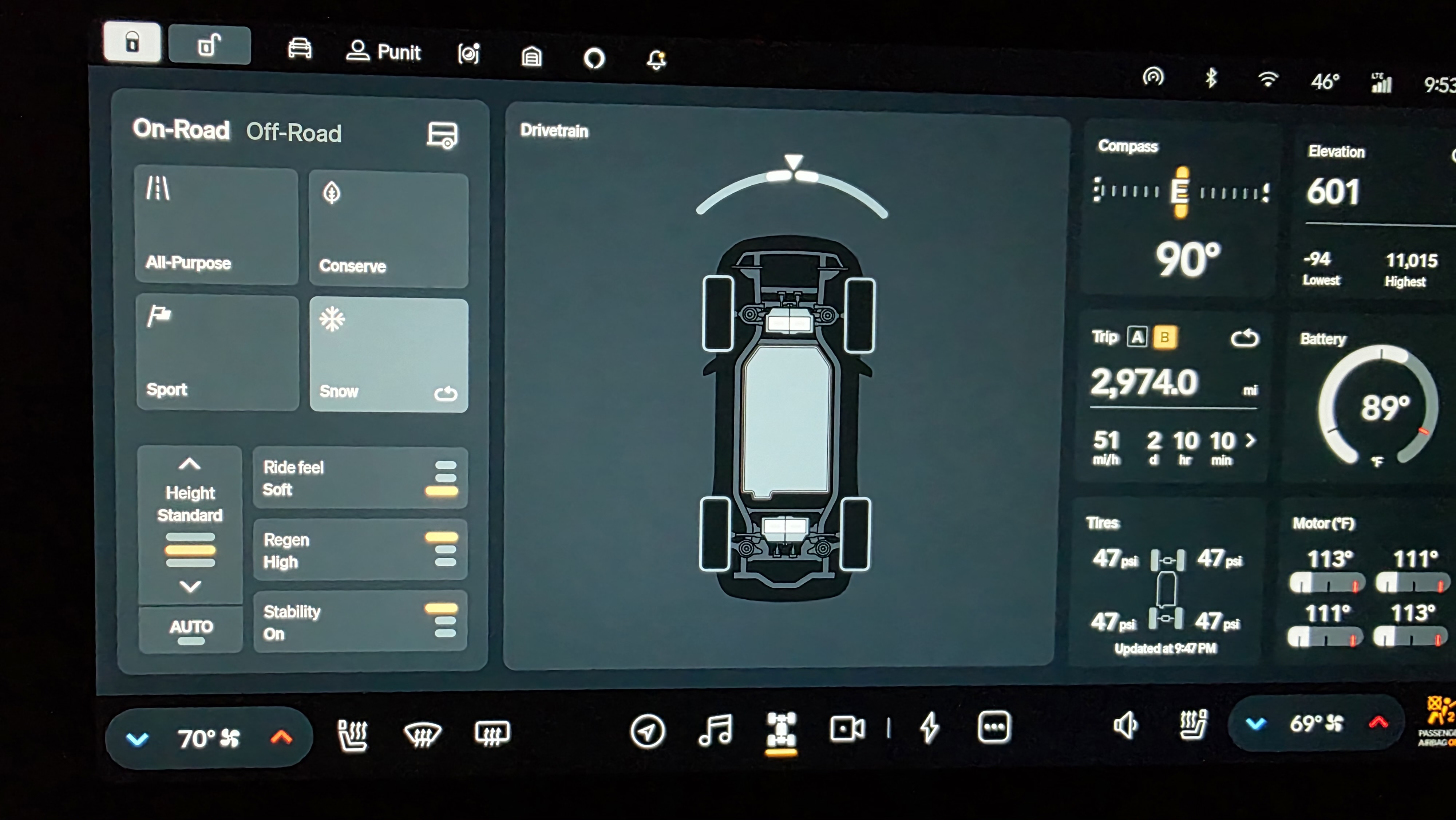
Light snow on the summit, I-70 backed up with traffic. Google routed us off the interstate onto an inner road — unpaved, unplowed, dark. The R1S didn’t flinch! The Toyo AT3 all-terrain tires, all-wheel drive, air suspension doing what it’s built for. It was the most dramatic twenty minutes of the trip and also a perfect demonstration of why this vehicle exists!! We made it to Frisco, charged to 77%, and descended into Denver with the city lights spreading below us.
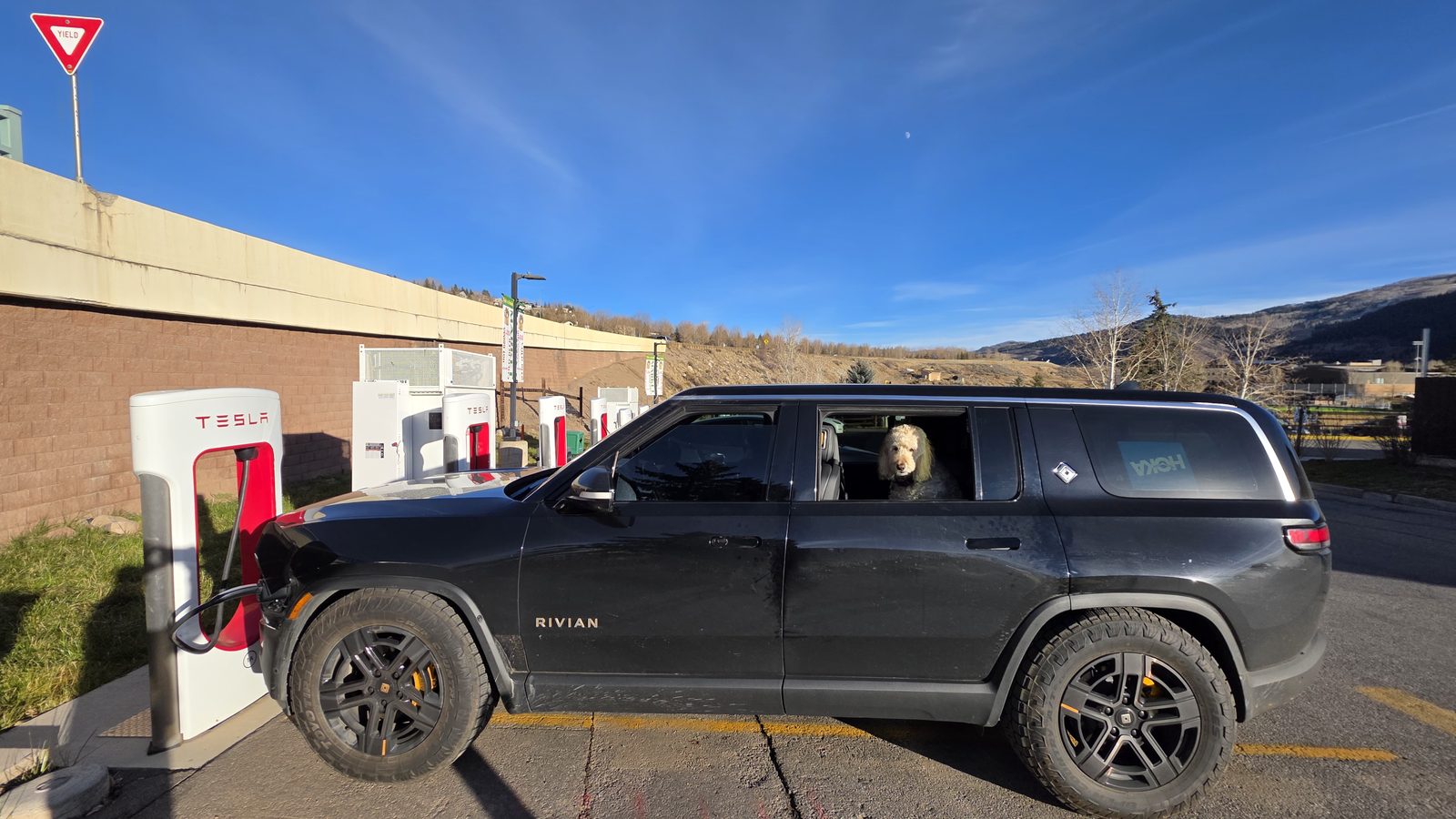
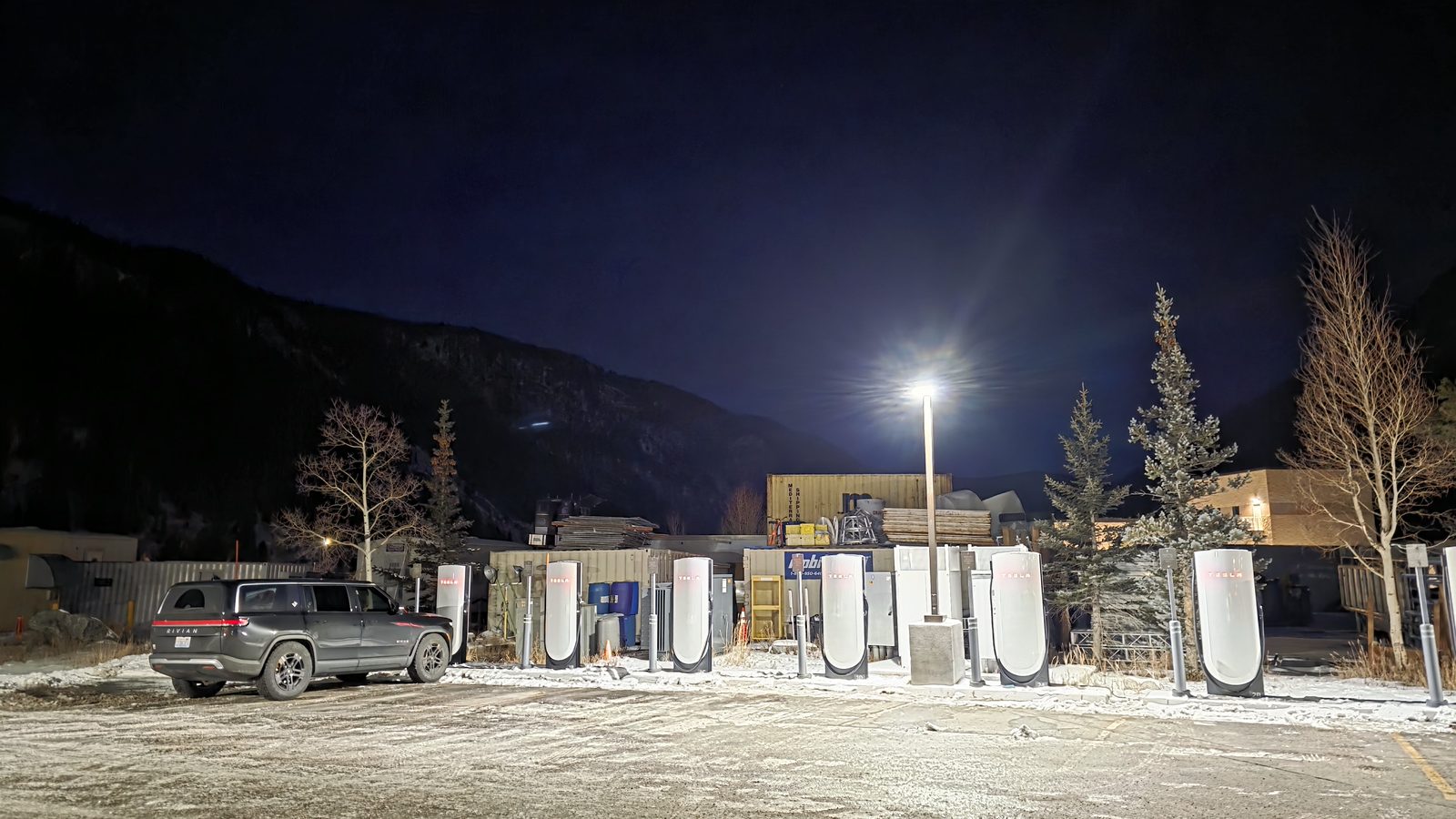
1,435 miles from the Seattle area. Three mountain passes, dense fog, rain, Moab detour at dusk, Vail Pass at night, off-road detour on unplowed road. Zero gas stops! Does it get any more adventurous than this for any vehicle, let alone an electric one??
Four Nights in Denver#
We spent almost a week in Denver. And the entire time I was watching the weather back home!
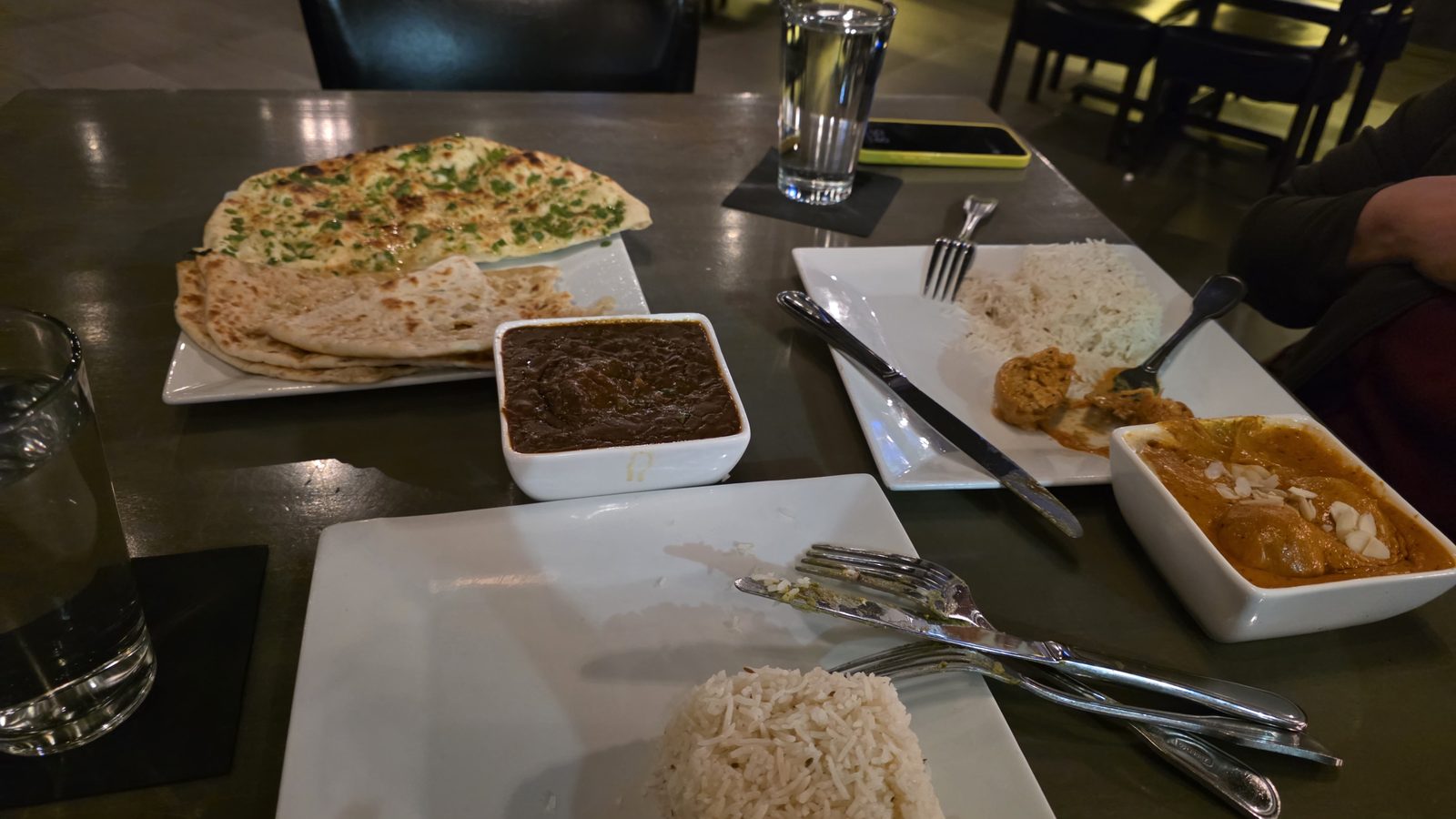
The Return — Post-Snowstorm, Icy Roads, Mountain Home at Midnight#
We left the day after a major snowstorm had dumped on Denver and the Rockies. Roads were still icy when we pulled out. The R1S in these conditions is something else — stable, planted, confidence-inspiring in a way that’s hard to explain. I call it the Tank! The Toyo AT3 EVs I had recently installed were phenomenal in the snow.
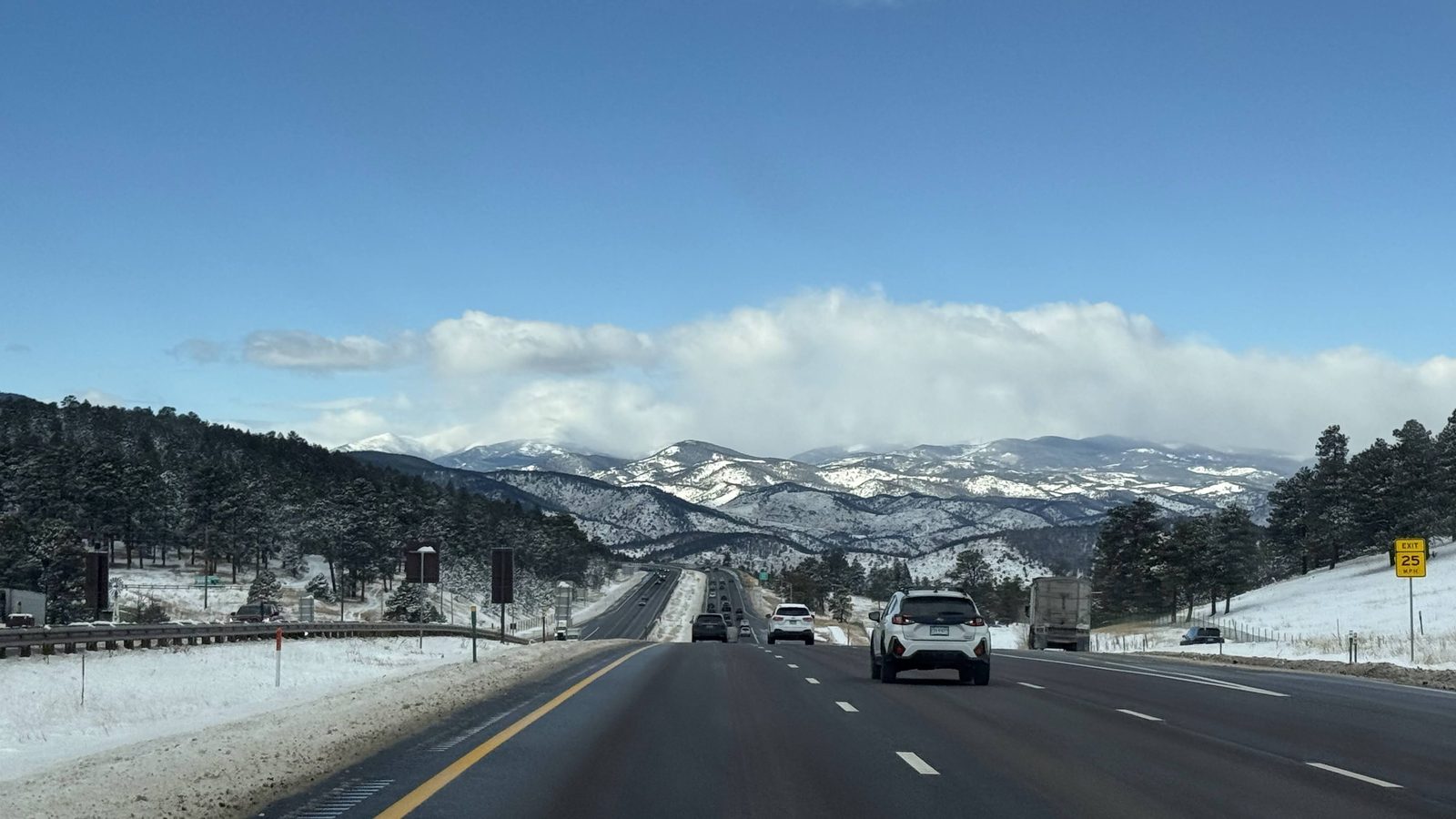
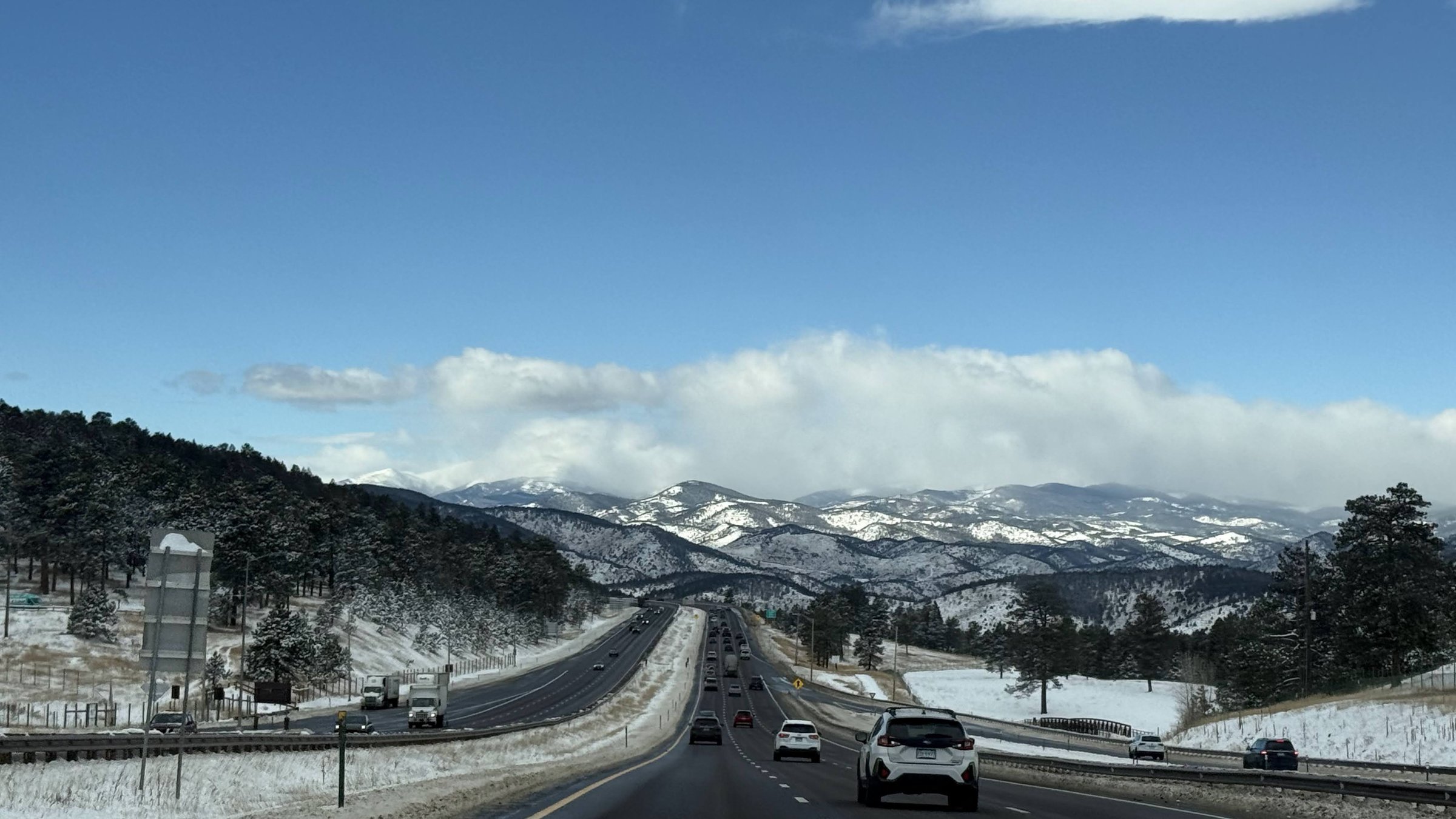
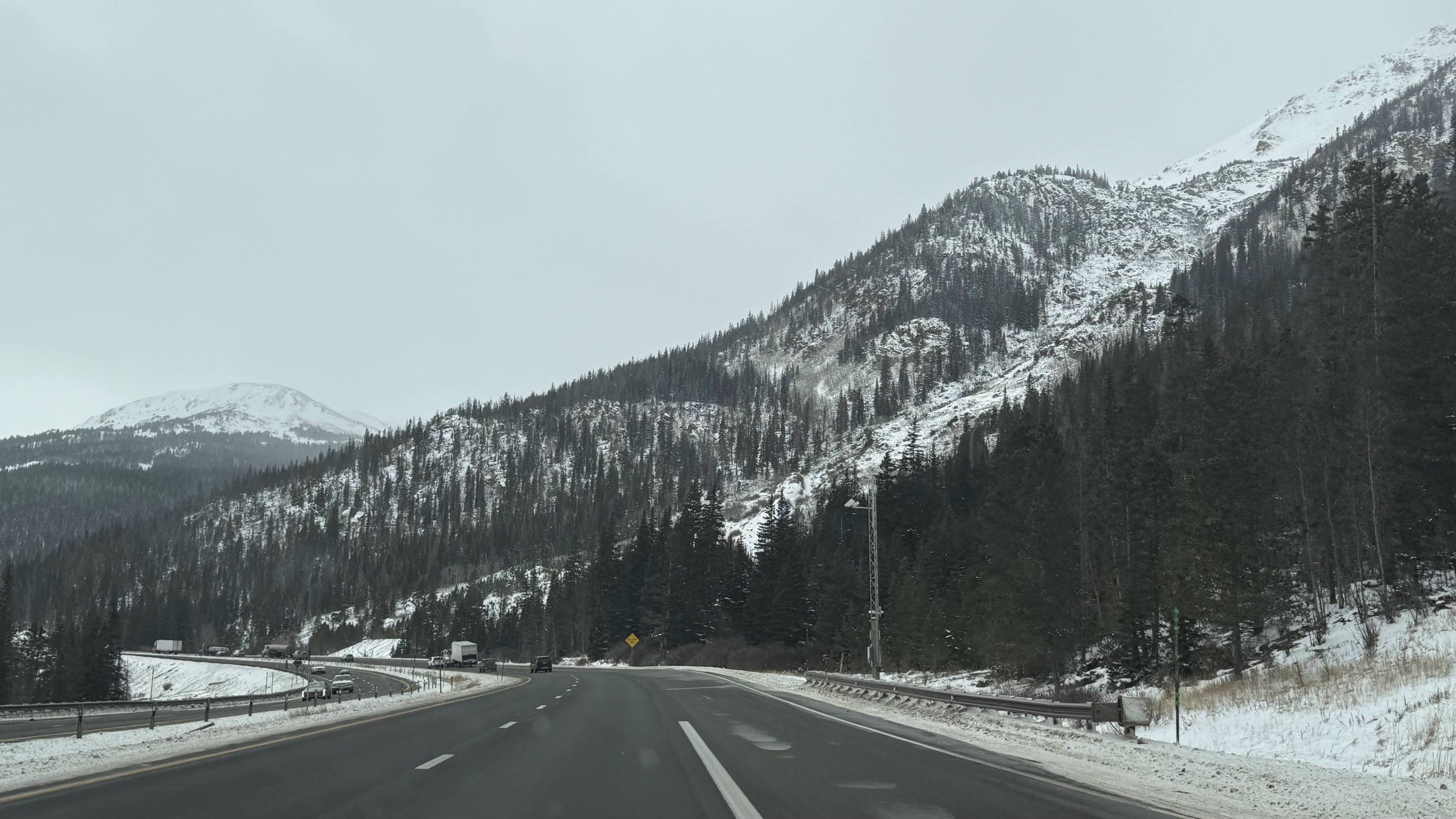
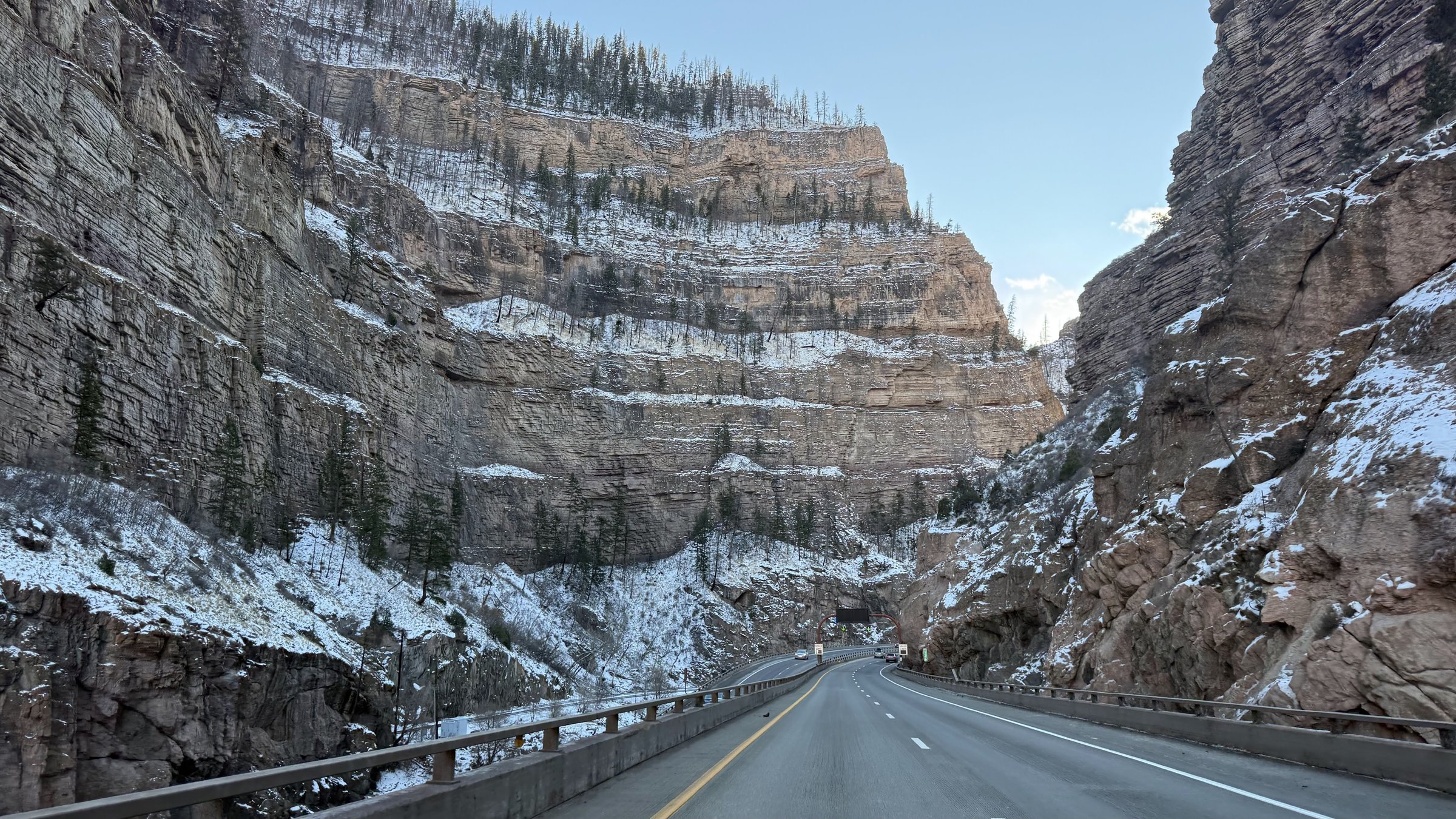
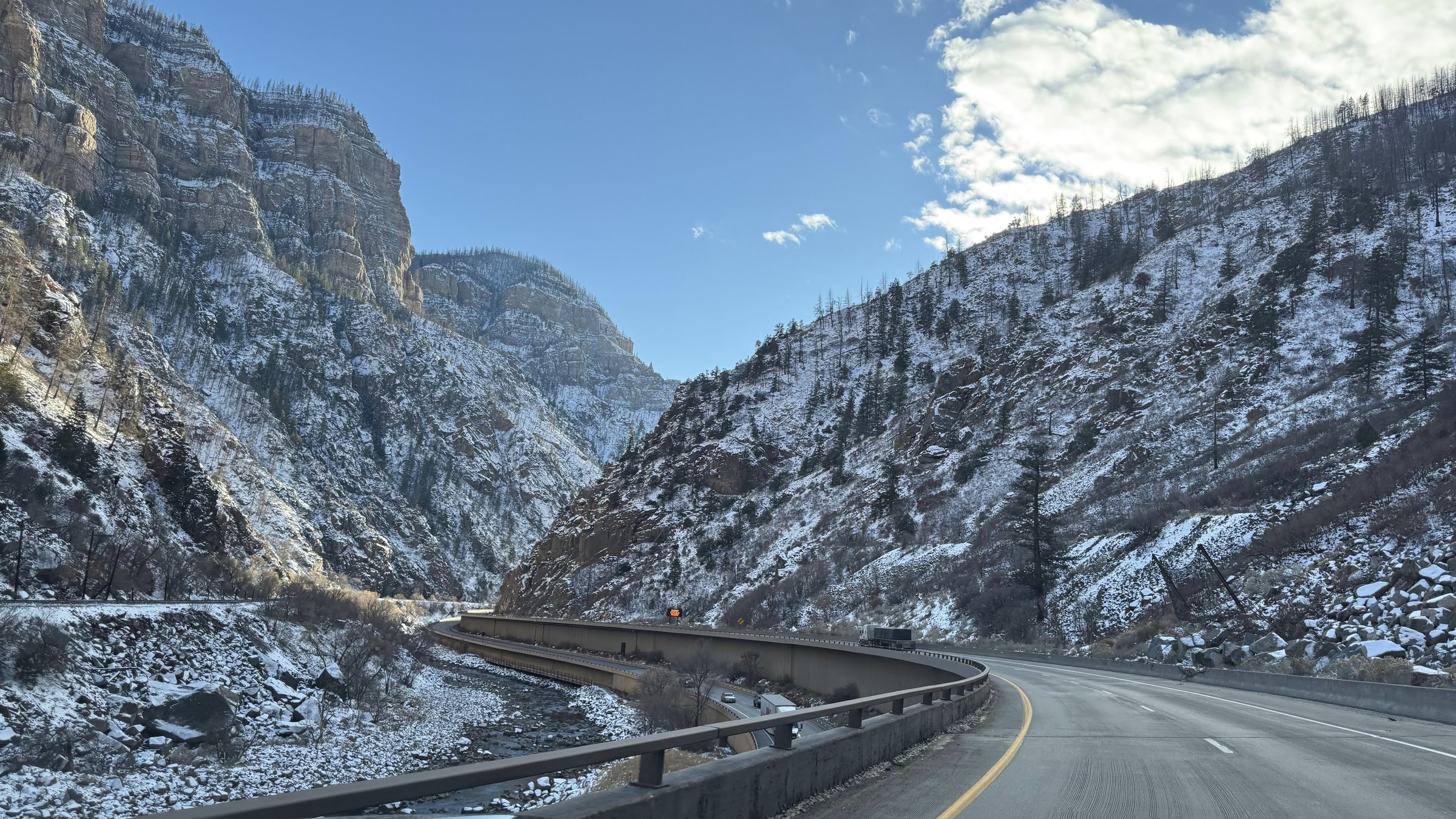
Heavy rain through Utah and Idaho. Sustained precipitation over mountain terrain hits range harder than highway cruising — the cold, the regen cycles, the slower speeds through weather. We made every stop, we watched the battery, we made it. But it was a reminder that range planning in bad weather needs a buffer you don’t need on a clear day!
Then Mountain Home, Idaho. Dead of night. We pulled into a gas station — no power! The entire site was dark, the gas station, the Supercharger, everything. We turned around, found the next available charger, added maybe thirty minutes to the night. It wasn’t dramatic, it’s a thing that happens. But this is the most important habit for EV road trips: have a backup in mind before you arrive at a charge stop! Especially late at night in rural stretches.
Snoqualmie Pass was the anxiety I’d been carrying the whole return trip. The forecast had been calling for heavy snow. We watched it shift and soften all day as we drove north through Oregon. By the time we hit the Cascades it had largely fizzled — mostly rain, manageable conditions. The R1S climbed the pass, regen brought us down the west side, and we were home!!
I’ve driven this corridor twice in an EV now. Once in a sprint, once at a human pace. The leisurely version wins every time! Not just because it’s easier on you. Because you actually get to be in it.
The Honest Take#
Here’s the honest version of where EV road tripping stands right now, from someone who’s done the Seattle-Denver run twice:
It’s not quite like driving a gas car yet. You still think about range. You still plan your stops. The charging network has gaps — long stretches in rural Oregon and Utah where you run the math more carefully than you’d like. A dead Supercharger at midnight is a real thing that happens!
But we are very, very close! Two complete 3,000-mile round trips in the R1S, across the Rockies, in November, in weather — and both worked. The infrastructure on the Seattle-Denver corridor is genuinely excellent. The car handles everything the mountains throw at it. The charging stops, when you let them breathe, become the part of the trip you remember!
I love that I can do these trips — the open roads, the freedom, the Moab detours we almost talked ourselves out of, the breathtaking cold beauty of I-70 through the Colorado Rockies, the food, all of it — without burning a drop of gas! Without polluting the outdoors I’m out there to see. There’s something in that I can’t fully articulate but can’t stop thinking about.
The adventure, the dare of it! Becoming one with the machine on I-70 in the dead of winter, the most demanding interstate in the country. Trusting your instincts, trusting the car. I love every moment of it!!
Why I Built TrailSpark#
After this trip I came home with hundreds of photos. Every charging stop, every Moab canyon walk, every Vail Pass whiteout moment. And all of them had GPS coordinates and timestamps baked right in! I kept looking at my camera roll thinking — this entire trip is in here! The whole story, every stop, every mile, all in the metadata of photos we were already taking.
But where does that trip live? A group chat that gets buried in a week? A camera roll nobody scrolls back to? These trips deserve to be seen and shared! The routes, the charging stops, the moments where you’re standing in Moab at golden hour.
So I built TrailSpark! You drop your photos in and it builds your road trip. Your stops, your route, your charging data, your milestones — all on a timeline you can share. No writing required, just the photos you already took.
If You’re Planning This Route#
Do it in four days, not two!! The two-day version is possible. I’ve done it. It’s exhausting and you see nothing. Four days with overnight stops in Boise, SLC, and Grand Junction is the right pace for this route.
Watch the weather obsessively. Three mountain passes — Snoqualmie, the Blues, and Vail. All of them can close or get ugly in late fall. Check TripCheck OR and CDOT the morning of every driving day. Leave a day early if a storm is building!
Charge at Edwards before Vail Pass. Non-negotiable in winter! The summit is at 11,113 ft and cold weather plus climbing will eat range. Stop at Edwards even if you feel like you have enough. You want margin at the top.
Go to Moab. Seriously!! It’s a short detour off the main corridor. If you have range and you haven’t been, go. If you have been, go again. We almost stayed the night and should have.
Have a backup for every charge stop. Know the next charger before you pull in, especially at night in rural Idaho and Oregon. Dead stations happen! Mountain Home at midnight taught me that.
Bring the dog. Korra knew she was on an adventure from the moment the bags came out. She loved every hotel. She walked every charging stop. She’s the reason the Moab detour lasted as long as it did! Bring the dog!!
The Electric Adventurer & Korra · Seattle Area, WA → Denver, CO → Seattle Area, WA · November-December 2025
Got your own EV road trip? Drop your photos into TrailSpark and share it!!