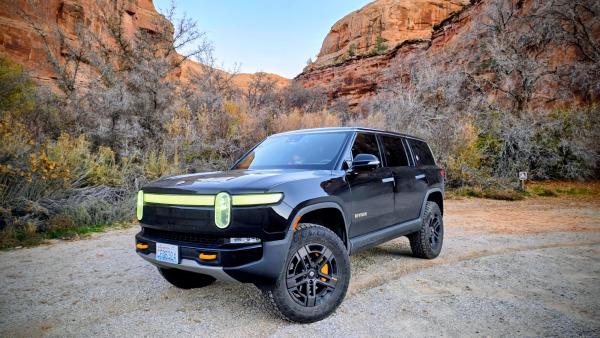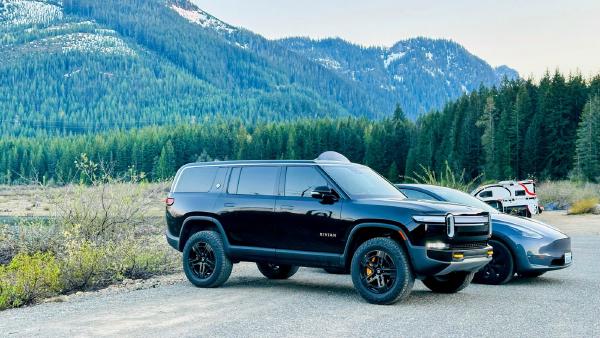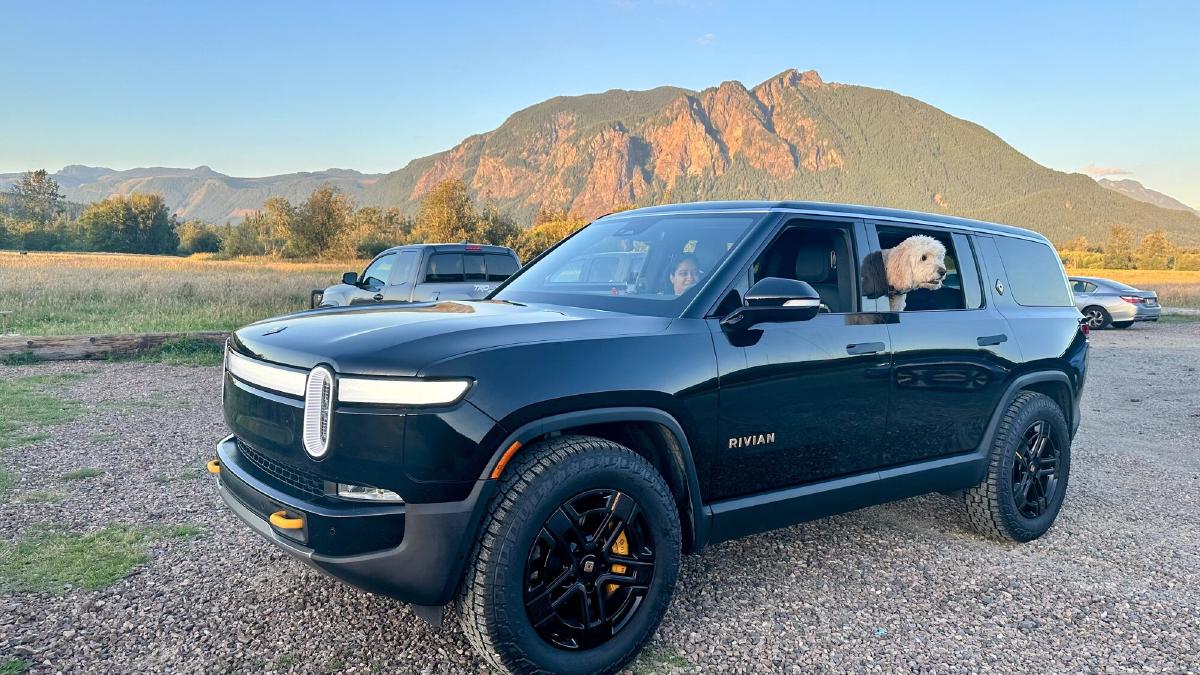
A thousand horsepower three-row family SUV that beats a 911 in acceleration and a Wrangler in ground clearance shouldn’t exist. Yet here it is. The Rivian R1S is an absurdity that somehow works perfectly, and it’s the best car I’ve ever owned.
The Short Version#
- What it is: A quad-motor Rivian R1S. Nearly 1,000 horsepower, three rows, real off-road capability, and the tech sophistication of a Tesla, in a single vehicle that refuses to make you choose between adventure and sense.
- The ownership arc: Preordered in October 2022, took delivery March 2024, then leased an R1T alongside it to test both body styles. The dual-motor truck taught me the quad-motor R1S is the one I actually need.
- Why it wins: It’s the first car that works for all of us, Korra included, thanks to pet mode and a quiet cabin. EV road trips through Colorado winters turned charging stops into structure and made me one with the machine. And Rivian actually listens, refining the vehicle over the air based on real owner feedback.
- What could be better: Laggy software, occasional bugs, a flaky 12V battery, and, most seriously, half-shaft durability. Honest flaws, none of them dealbreakers.
- The plan: When my lease ends in September, I’m not shopping. I’m buying a used Gen One quad I already know is exactly what I need.
Why Nothing Else Existed#
For years, I’ve been caught between two incompatible desires. I love the capability of serious trucks and SUVs, the Bronco, the Wrangler, vehicles built for actual terrain. But I also love technology, efficiency, and not hemorrhaging money at the pump. The problem is simple: nothing combined both. You got adventure or you got sense. You didn’t get both.
And then there’s Korra, our Goldendoodle, the center of our universe, the reason every car decision in our house gets filtered through one question first: does it work for the dog? Large dog life is real. You need space, you need climate control when you’re running into a store, you need a vehicle that doesn’t make your dog feel like an afterthought. Almost no manufacturer thinks about this. Almost.
Then Rivian showed up with an answer nobody else was brave enough to build. An EV that looked and drove like an adventure vehicle, with the tech sophistication of a Tesla and the capability that actually exceeded what a Wrangler could do. One that had pet mode built in from day one. It wasn’t a compromise. It was someone saying: why choose?
The Decision#
I placed a preorder in October 2022. For eighteen months, I waited. Then in March 2024, I finally had the keys in my hand.
But first, I had to choose: dual motor or quad motor. I’d watched Kyle Conner’s reviews extensively. I’d read through Reddit threads. The consensus was solid: dual motor performance is more than enough for most people. But when I ran the numbers on lease residuals, quad had the higher value, which meant a lower monthly payment. It was a financial decision, pure and simple. I went quad because it made sense on the spreadsheet, not because I understood what that choice would actually mean.
Here’s the thing about leasing an EV: it’s actually smarter than buying new. Technology moves too fast. Look at Gen One versus Gen Two: better tech, better refinement, but also real compromises. Buy a new EV and you’re eating depreciation on a platform that’s already evolving. Lease for a few years, test the technology, ride out the current generation, and then buy used. Someone else pays the depreciation. You get the refined version at a fraction of the cost. That was my strategy. Test it out. Prove it works. Then decide.
Context matters here too: I drive hard and I drive a lot. Seventy to eighty miles a day commuting five days a week, plus long road trips to Colorado and beyond. High mileage is just part of my life. A single leased vehicle with mileage caps couldn’t contain that, which is part of why having two vehicles eventually made practical sense alongside the financial logic.
What Ownership Actually Means#
From day one, the R1S delivered on that promise. Nearly a thousand horsepower meant acceleration that felt illegal in a family SUV. The suspension, which started a bit rough, kept improving with each software update. The ground clearance, the approach angles, the ability to haul six people plus a week’s worth of gear and still feel composed on a twisty road: it was everything I’d imagined.
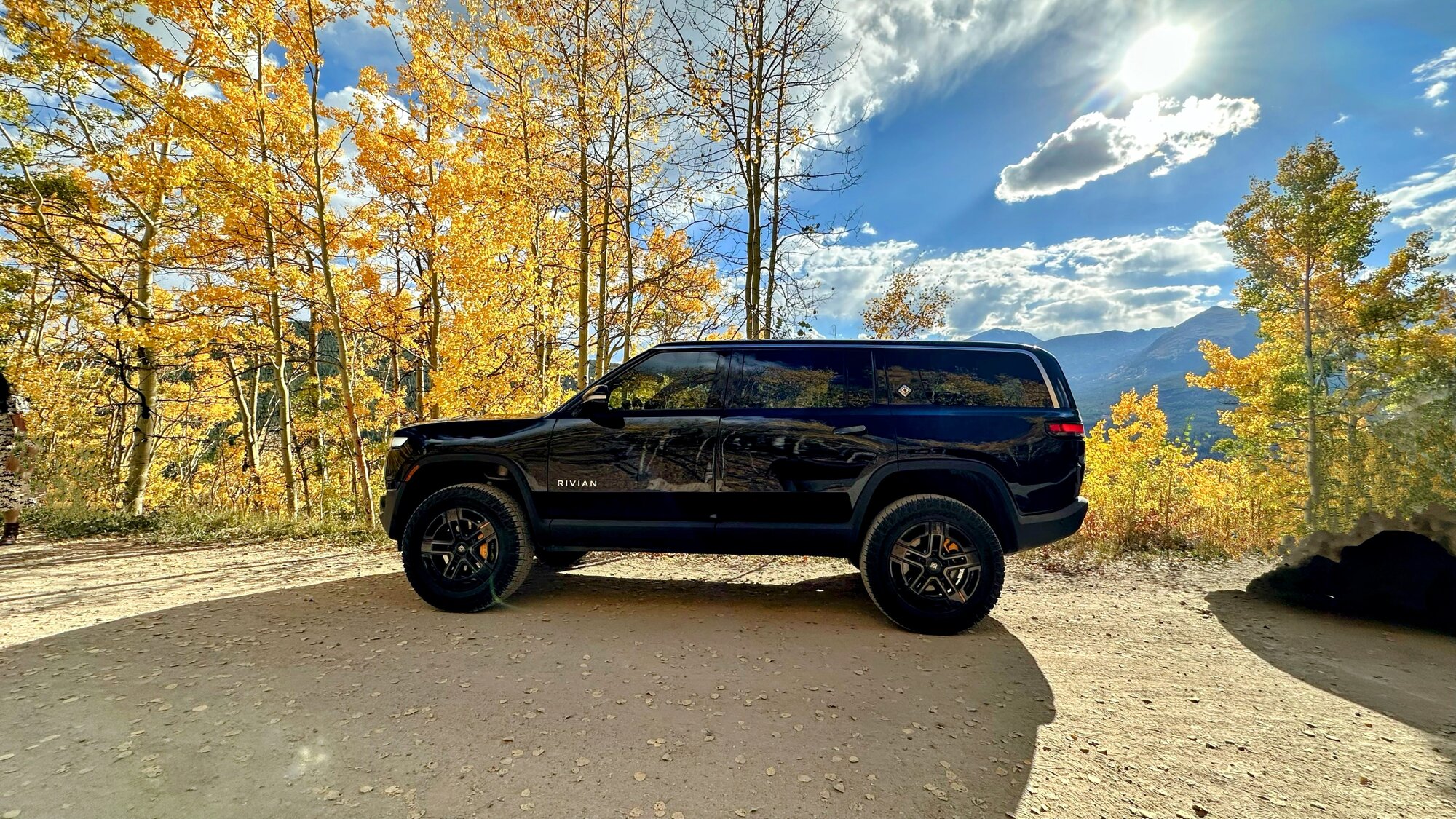
Pet mode was one of the reasons I chose the R1S in the first place. Here’s the reality of owning a large dog: you cannot have a car without it. When Korra’s in the back seat and you need to run an errand, climate control isn’t optional. It’s non-negotiable. Tesla figured this out early. Rivian took it seriously too. Almost no one else has. Rivian had pet mode built in from day one, but the temperature control was limited, and you couldn’t bring it down far enough for real-world use. Then, shortly after I posted about it on Reddit, an OTA update arrived that let me set it to 63 degrees Fahrenheit. The community had been flagging this for a while, and Kyle’s reviews highlighted it too, so Rivian was clearly listening. Problem solved. Korra approved.
But here’s what really separates Rivian from everyone else, even Tesla. This company actually listens. On Reddit, in forums, directly to customers, Rivian’s team is present and responsive. The suspension refinement I mentioned? That came from continuous OTA iterations based on real feedback. The owl unlock sound the community demanded during Halloween? They kept it permanent. You don’t just buy a vehicle. You join a feedback loop with a company that actually cares about getting better.
And RJ Scaringe doesn’t inject himself into culture wars or personal politics. The brand stays focused on the product and the community. Rivian earns loyalty through actual responsiveness and good faith. You feel heard as a customer, not managed.
Korra’s Car#
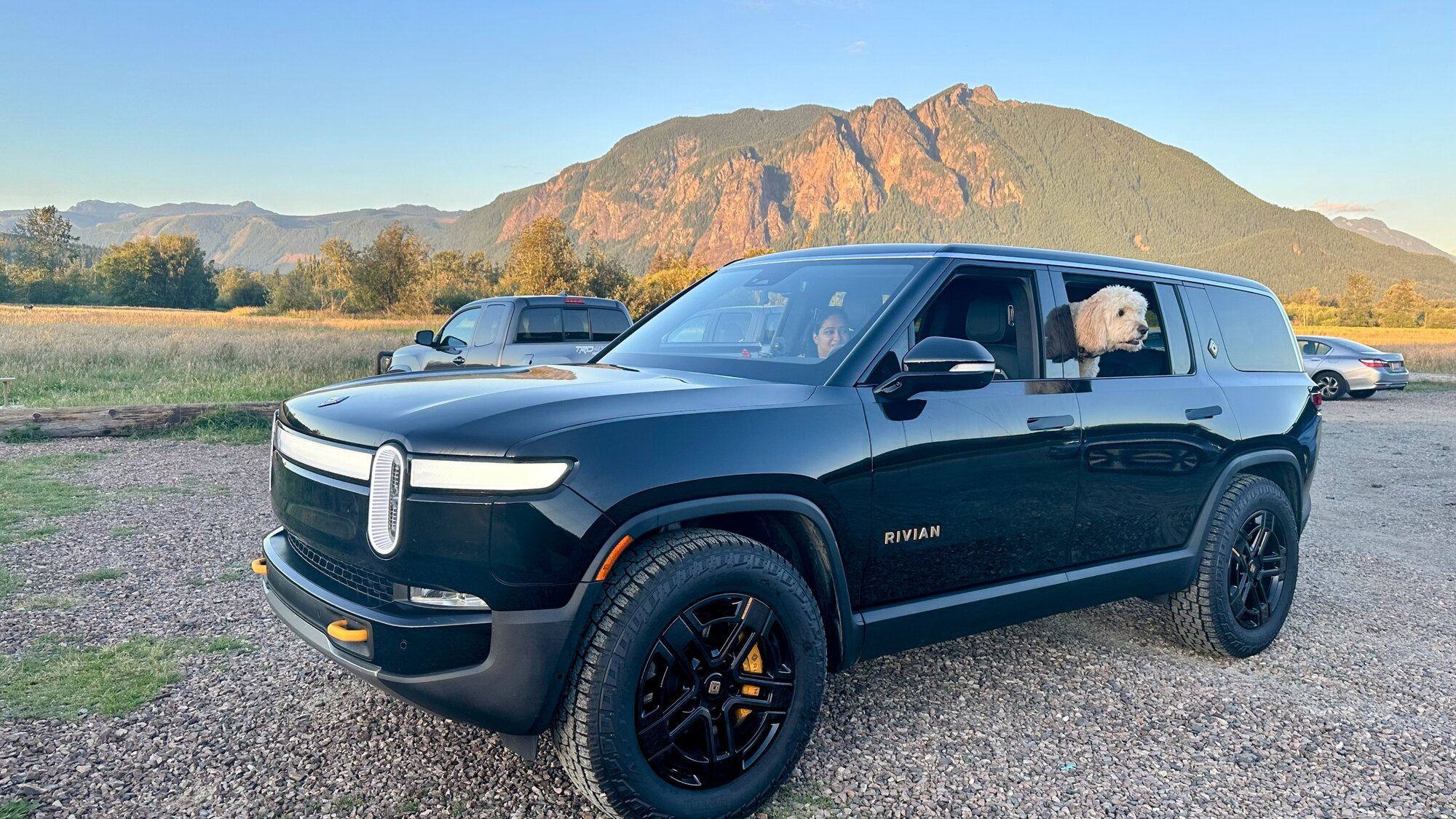
Korra rides in the rear seat, and she has decided it’s hers. When it’s time to leave, wherever we are and whatever we’ve done, she doesn’t want to get out. I have to coax her out every single time.
That tells you something a spec sheet never could. The R1S has enough space for a large dog to genuinely sprawl out and be comfortable. The ride is smooth enough that she settles within minutes. Pet mode keeps the temperature exactly where it needs to be. And an electric vehicle is quiet: no engine rumble, no vibration at idle, so she actually relaxes instead of staying alert. It’s the first car we’ve owned where Korra is as at home as we are.
For families with large dogs, the shortlist of vehicles that actually work is short. Tesla and Rivian are on it. Almost everyone else isn’t.
The R1T Detour#
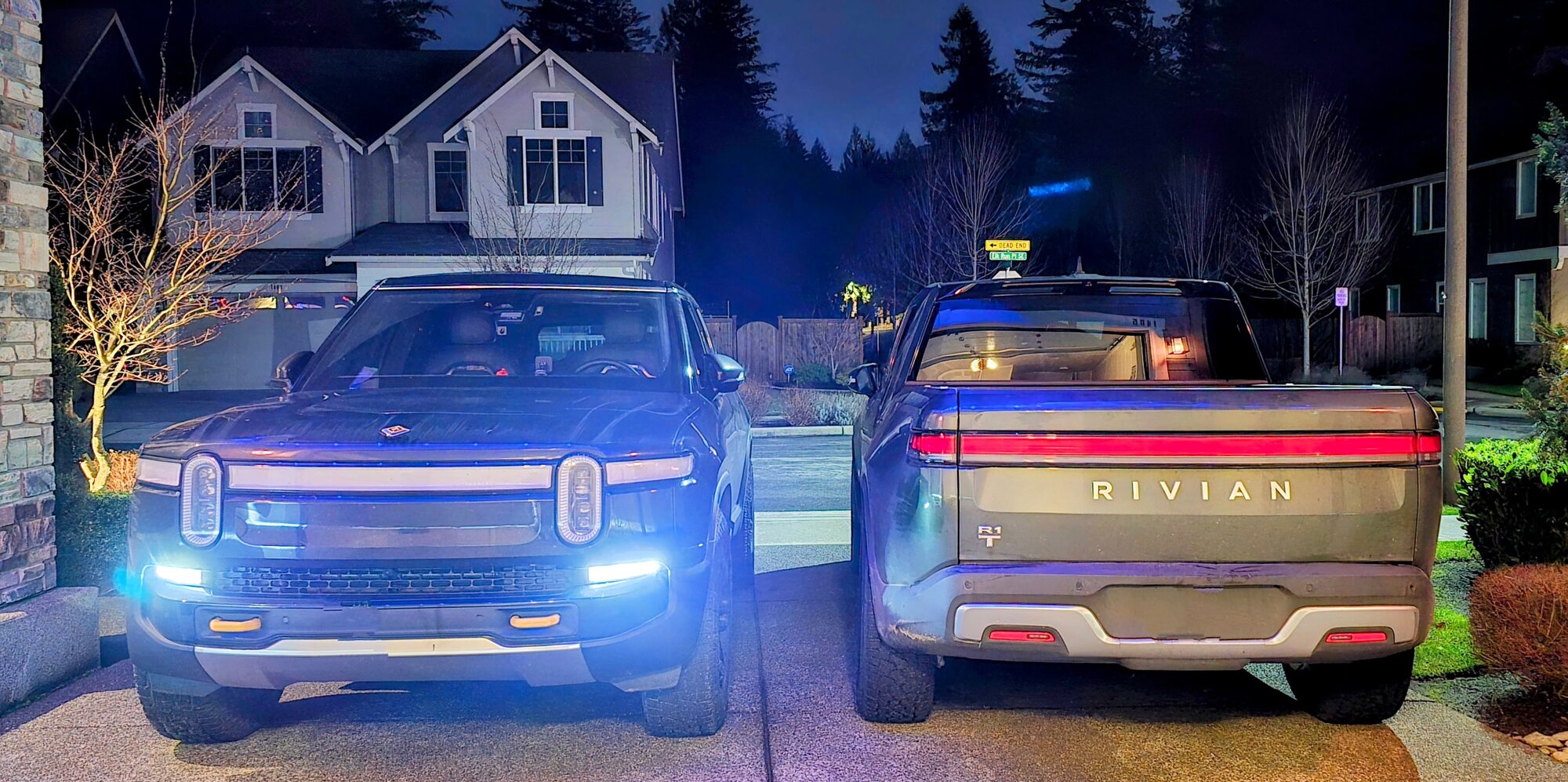
Here’s where things got complicated. I was sitting on a depreciating Tesla Model Y I wasn’t driving. Rivian was closing out 2024 model year inventory with aggressive lease deals and employee discounts. Financially, it made sense to add a second vehicle, one that let me actually drive the R1S without blowing through mileage limits on an unproven platform. So I leased an R1T.
This was part of the strategy: test both body styles, understand what actually matters to me, without the financial risk of owning either one outright. Leasing gave me that freedom.
Honestly, I liked it. The dual motor performance version hits zero to sixty in three point four seconds. It’s no slouch. The truck had a longer wheelbase, which meant better suspension tuning than the R1S. For months, I primarily drove the R1T and barely touched the R1S.
Then something shifted. As Rivian continued to refine the R1S with software updates, the quad motor’s advantages became impossible to ignore. I’d drive the R1S, feel that all-wheel drive torque vectoring, and go back to the R1T feeling like something was missing.
The dual motor R1T is front-wheel drive dominant with all-wheel drive on demand. There’s no torque vectoring. It’s an unusual architecture for a performance vehicle. I don’t know of another performance car that switches between front-wheel drive and all-wheel drive like that. It works fine for commuters, but in a truck meant to perform, it compromises the driving dynamics. The quad, on the other hand, is all-wheel drive all the time with active torque vectoring. It’s a completely different animal.
I started driving the R1T exclusively in snow mode just to get that constant all-wheel drive traction. Even after Rivian released an update that let me run sport mode with all-purpose suspension on the dual, it still didn’t feel right. The quad had spoiled me.
Would I lease another R1T? No. But would I buy a used quad motor version? Absolutely. The dual motor taught me what I actually need in a vehicle, and it’s not a compromise. The R1T is a fantastic truck. I just need it with the right powertrain.
What the Road Actually Taught Me#
The real proof isn’t on paper. It’s on the road.
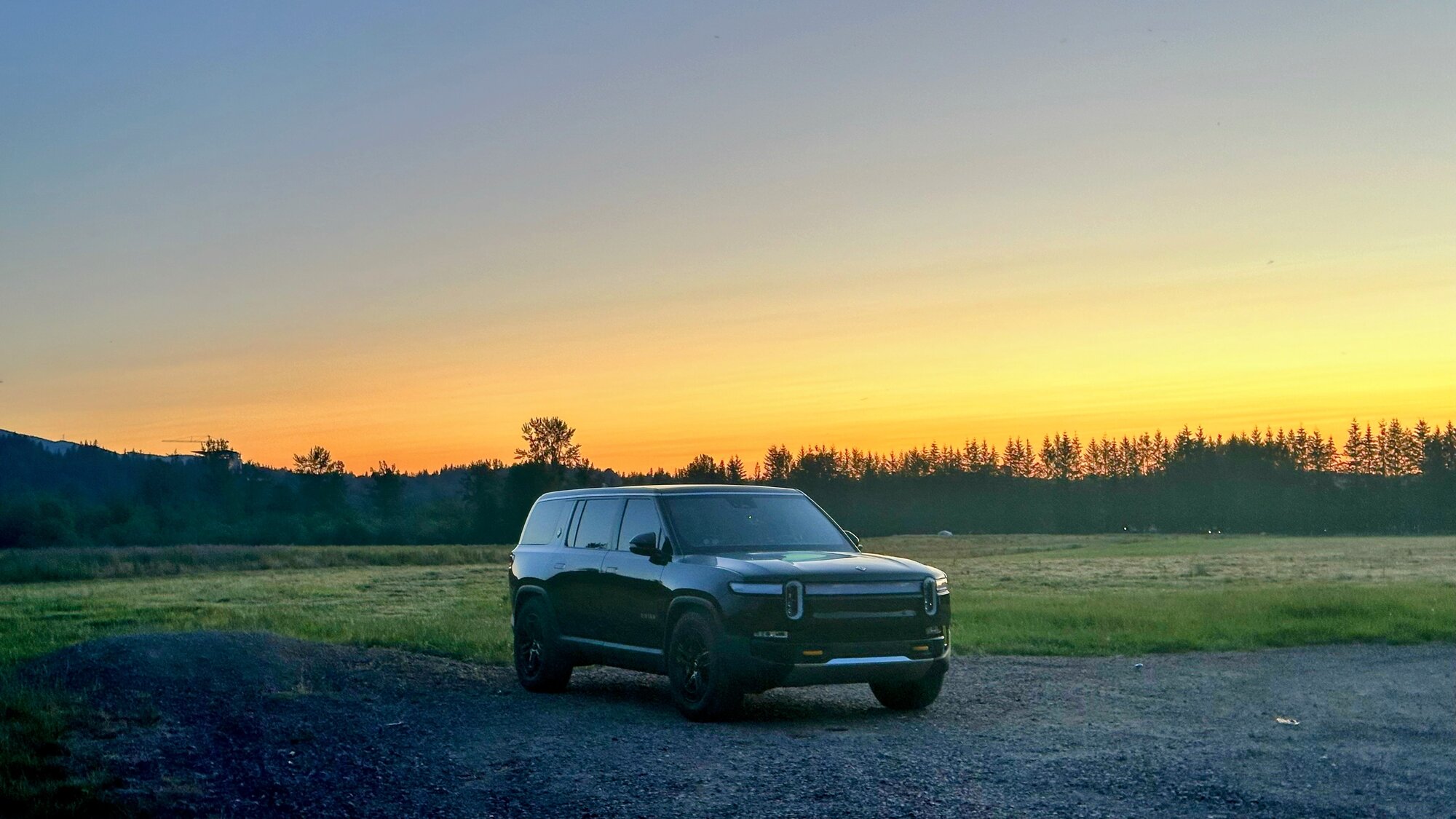
I’ve taken this car through Colorado in the dead of winter. Down I-70, the most demanding interstate in the country, in snow and darkness, with Vail Pass ahead and nothing but trust between me and the mountain. The R1S didn’t flinch. It never does. Korra was in the back seat, completely unbothered, already asleep before we hit the pass.
What I didn’t expect when I went electric was how much it would change the way I drive. On a road trip in an EV, you’re engaged. You’re reading the battery, planning charging stops, understanding efficiency at elevation, adjusting for cold temperatures. For someone who doesn’t love data and optimization, that might sound like a chore. For me, it’s the whole point. There’s a rhythm to it. You learn the car, the car learns the road, and somewhere on a mountain pass at night you realize you’ve become one with the machine in a way that just doesn’t happen when you’re pumping gas and moving on.
Charging stops aren’t interruptions either. They’re structure. They’re the moment you step out, breathe the air, look around at where you actually are, and let Korra stretch her legs. Some of my best memories from these trips happened at a charger in the middle of nowhere.
And underneath all of it is something I didn’t fully appreciate until I was standing in the Colorado mountains watching snow fall on a silent electric vehicle: I got here without burning a single drop of gas. Without polluting the outdoors I came out to see. That alignment, between loving adventure and actually protecting it, is something no other vehicle has given me.
What Could Be Better#
No honest ownership review skips this part. The R1S has earned my loyalty, but Rivian still has work to do.
Software responsiveness. The OTA update culture is exceptional, but the software itself still feels laggy compared to Tesla’s. The interface isn’t as snappy, and that gap is noticeable when you’ve driven both.
Bugs. Easy entry mode forgets your settings more often than it should. The infotainment system glitches occasionally. Rarely, but enough to remind you this is still a startup building complex software. These are improving, but they’re real.
Charging. CCS charging and the early reliance on Tesla Superchargers were a pain point that required adapters and workarounds. To be fair, this is largely resolved now, and the charging landscape has opened up significantly, but early owners felt it.
Sound system. It’s good, but not Tesla good. And the lack of native YouTube Music integration is a miss for anyone who lives in that ecosystem. People harp on the absence of CarPlay and Android Auto, and I get it even if it’s not my personal priority.
12V battery failures. This one sounds alarming, but Rivian has handled it well, with proactive notifications and prompt warranty replacements. Still, it’s a known issue that shouldn’t exist on a vehicle at this price point.
Half shafts. This is the most significant mechanical concern. My R1T’s half shafts started going at 22,000 miles. My R1S is showing similar signs at 37,000 miles. For a vehicle marketed on adventure capability, drivetrain durability needs to match the promise.
No OEM running boards. For a large SUV with significant ground clearance, this is a real gap, especially with kids, older passengers, or large dogs. I self-installed them on the R1T. It shouldn’t be a DIY afterthought.
None of these are dealbreakers. Clearly, since I’m buying another one. But they’re honest, and Rivian deserves the feedback.
Why I’m Buying Another One#
Should I switch to a Gen Two quad or tri-motor? Both are supposedly more refined. But both sit at premium price points. I sat in a Gen Two. The doors don’t feel as solid as the Gen One. The music system is apparently worse. And the autonomous driving isn’t in the same universe as Tesla’s FSD. If it were close, I’d seriously consider it. But it’s not.
The tri-motor Gen Two is roughly equivalent to a Gen One quad in power and performance. But you’re still paying significantly more for incremental refinement. The appeal is lost.
This is where the lease strategy proves itself. I’ve tested the platform for two and a half years. I know what works. I know what matters. I know the quad motor isn’t negotiable. So why pay a premium for a Gen Two when I’ve already proven the Gen One quad is exactly what I need?
Could I buy out my current lease? Technically. But the residual value was set so high (that’s how they kept lease payments so low) that I’d be underwater immediately. Financially, it makes zero sense.
So in September, when my lease ends, I’m not shopping around. I’m buying a used Gen One quad I already love. Someone else can pay for the next generation’s depreciation. I’ll be too busy taking it on the next adventure.
Not everyone gets this level of obsession with a car. The data, the efficiency planning, the quad versus dual debate, the lease residual math. But this is how I’m wired. And the R1S is the first vehicle that’s ever been wired the same way.
And Korra? She’ll be in the back seat. Not wanting to get out.
TrailSpark is a free, non-monetized adventure series documenting electric vehicle travel. Vol. 01 covered the North Bend to Denver road trip. Vol. 02 covered an F-150 Lightning rental in the Denver suburbs.